






















Now Reading: Digital apps see low women participation, ILO-NCAER report finds
-
01
Digital apps see low women participation, ILO-NCAER report finds


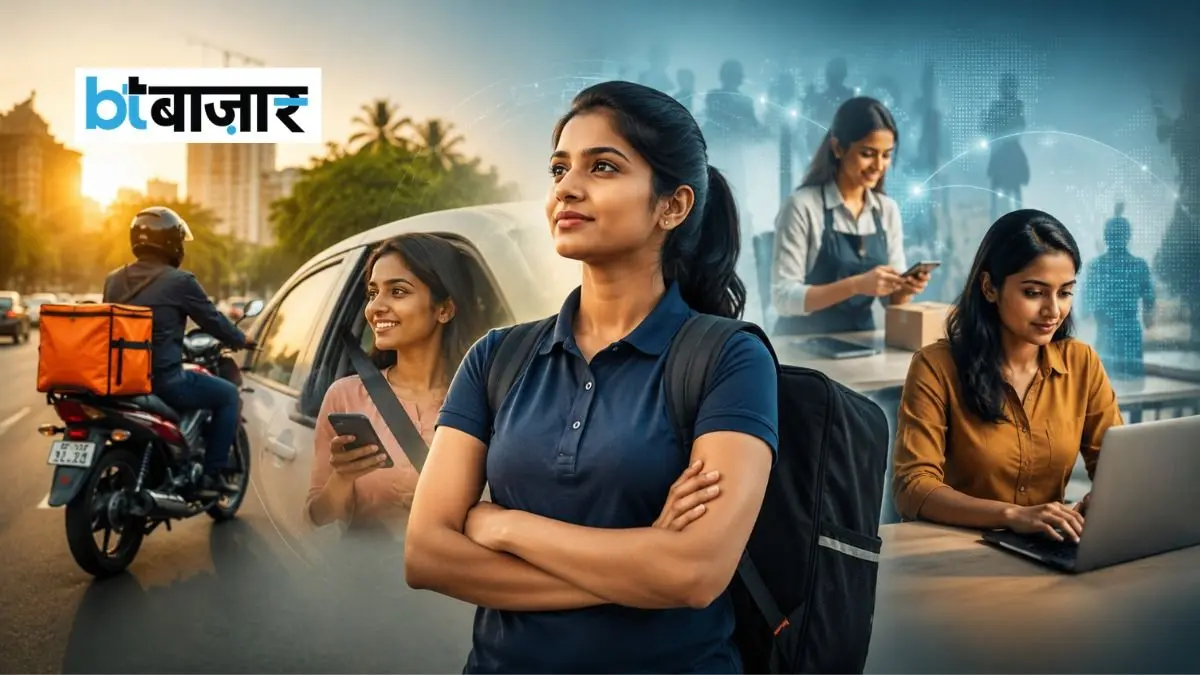
A joint report by the International Labour Organization (ILO) and the National Council of Applied Economic Research (NCAER) released on Monday shows that while Indian women have nearly closed the gap with men in basic banking access, their share in app-based employment on platforms such as Uber, Swiggy and Urban Company remains low.
The report attributes this to a lack of digital skills, mobility issues, safety concerns and social norms. Only 56.2% of Indian women aged 15 and above own a mobile phone and just 37% can carry out online banking transactions, according to a 2025 government study cited in the report.
India's gig workforce is projected to nearly double to 2.35 crore by 2029-30, contributing an estimated Rs 2.35 lakh crore annually to economic activity. The World Bank estimates that raising women's labour participation to 50% could add about one percentage point to India's annual economic growth.
Indian Opinion Analysis
The core barrier is not just access but agency: a mobile phone and a bank account do not automatically translate into platform work when women also bear disproportionate unpaid care responsibilities. The RBI's 2023 financial inclusion index showed rural-urban and gender gaps narrowing on paper, but this report underlines that digital skilling programmes, such as the Pradhan Mantri Gramin Digital Saksharta Abhiyan, have yet to convert basic literacy into employable platform skills. Safety and mobility remain structural: under the Motor Vehicles Act, state governments set their own rules for gig-worker registration and background checks, creating a patchwork that may deter women in more conservative districts.
Source: bazaar.businesstoday.in
This brief was synthesised by AI from the source linked above. Methodology and corrections.