



















Now Reading: Diwali gifts taxable above Rs 15,000 for employees in 2026
-
01
Diwali gifts taxable above Rs 15,000 for employees in 2026


The Story in Brief
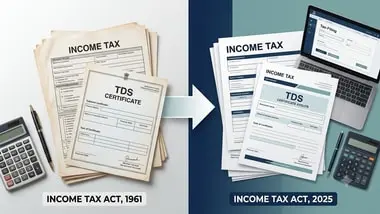
Gifts and vouchers received by employees during the festive season are not liable to tax if their total value for the financial year does not exceed Rs 15,000 under the Income Tax Rules 2026. If the limit is crossed, the entire amount becomes taxable as a perquisite. The earlier limit was Rs 5,000. Cash gifts, gift cheques and Diwali bonuses are fully taxable as salary.
For gifts to dealers and clients, TDS under Section 393 of the Income-tax Act, 2025 is deducted at 10% if the yearly value exceeds Rs 20,000. Once the threshold is crossed, TDS applies to the full value, not just the excess. The GST component is excluded while calculating the benefit's value, as clarified by CBDT Circular No. 18/2022.
Under GST, employer gifts worth up to Rs 50,000 per employee per year are not treated as a supply. Gifts to clients generally do not attract output GST. Input Tax Credit on goods given as gifts is blocked under Section 17(5)(h) of the CGST Act. Gift vouchers are taxed on redemption, but count towards income-tax and TDS limits.
Indian Opinion Analysis
The increase in the tax-free gift limit from Rs 5,000 to Rs 15,000 gives employees more headroom, but the all-or-nothing rule means a small breach can tax the entire value. For businesses, the Rs 50,000 GST threshold per employee is separate from the income-tax limit, creating two distinct compliance tracks. The blocked ITC under Section 17(5)(h) remains a cost, even for gifts given for business purposes. Companies must maintain employee-wise records and TDS payment proof to support deductions.
Source: studycafe.in
This brief was synthesised by AI from the source linked above. Methodology and corrections.