











Now Reading: DRI seizes 2 lakh tablets, arrests 3 in Nigeria-bound tramadol racket
-
01
DRI seizes 2 lakh tablets, arrests 3 in Nigeria-bound tramadol racket


The Directorate of Revenue Intelligence (DRI) has busted an alleged illegal export network and seized 2 lakh opioid tablets from a consignment at the Mumbai Air Cargo Complex. One lakh Tramadol Hydrochloride…
The Story in Brief
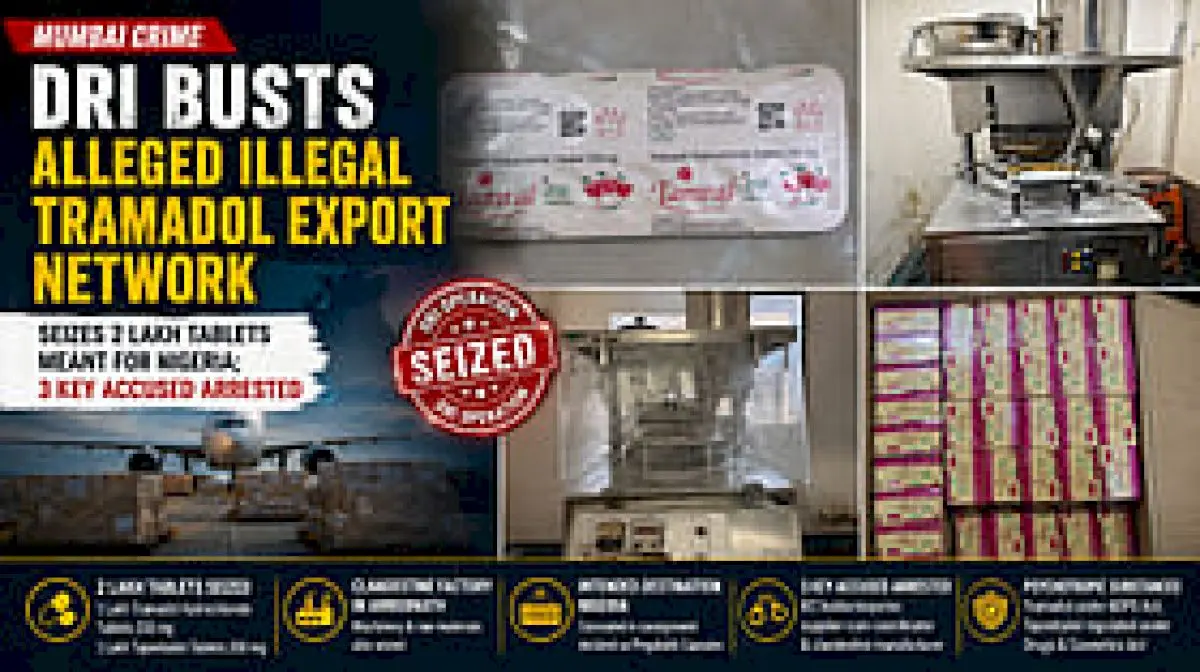
The Directorate of Revenue Intelligence (DRI) has busted an alleged illegal export network and seized 2 lakh opioid tablets from a consignment at the Mumbai Air Cargo Complex. One lakh Tramadol Hydrochloride and 1 lakh Tapentadol tablets, declared as Pregabalin capsules, were bound for Nigeria. Three key accused, the exporter, supplier-coordinator and clandestine manufacturer, were arrested.

Investigations revealed the tablets were secretly made at a factory in Ambernath, packed in plain cartons, and repacked at a warehouse near the airport. DRI also seized tablet compression machinery and raw materials. Tramadol is scheduled under the NDPS Act, while Tapentadol is regulated under the Drugs and Cosmetics Act.
The Indian Opinion
The bust shows DRI is alert to the illicit psychotropic trade, but the scale, a factory in Ambernath and a warehouse near the airport, suggests it is part of a larger, well-oiled syndicate. Ordinary Indians must ask: how does an opioid network operate so close to Mumbai's export hub without early detection? While enforcement matters, stronger checks on pharmaceutical raw materials and export declarations are equally urgent.
Sources (2): freepressjournal.in, deccanherald.com
This story was synthesised by AI from the 2 sources linked above.
Updated: this story now draws on 2 sources.