








Now Reading: Gadkari challenges critics to show ethanol-damaged vehicles
-
01
Gadkari challenges critics to show ethanol-damaged vehicles



The Story in Brief
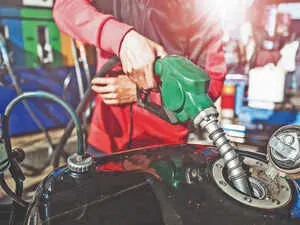
Union minister Nitin Gadkari, speaking at the Bihar Investor Summit 2026 on Friday, 2 October, challenged critics to produce evidence of vehicles damaged by ethanol-blended petrol. ‘I challenge anybody to come up with the complaint that his or her vehicle has suffered damage on this account. Of course, those with vested interests may have some other story to tell,’ Gadkari said, as reported by PTI and covered by Economic Times and Business Today.

Gadkari said around 4 crore four-wheelers and 20 crore two-wheelers have run on blended petrol since 2022, and that leading automakers tested vehicles on 100 per cent ethanol with no complaints. He said the ethanol-blending programme aimed to diversify agriculture into energy, with corn-based ethanol generating additional earnings of up to Rs 45,000 crore for farmers in Bihar and Uttar Pradesh. India imports conventional fuel worth Rs 22 lakh crore, he noted.
Meanwhile, a separate Economic Times report on 27 September noted a glut of nearly 7 billion litres of ethanol, with distilleries at 60 per cent capacity and the government pausing higher blends after consumer backlash. The government in July said premium petrol will remain ethanol-free and that any move beyond E20 will follow scientific studies.
Update, 5 October 2026: BusinessLine's July story adds that the government in July clarified premium petrol grades will remain ethanol-free and that any increase beyond E20 will be taken only after scientific studies and stakeholder consultations. The minister of state for petroleum said no widespread complaints about E20 have been received and more than 20 crore two-wheelers and 3 crore petrol cars are operating on higher ethanol blends.
Indian Opinion Analysis
The coverage splits into two distinct storylines. Economic Times and Business Today lead with Gadkari's challenge and his farm-income claims, giving no space to consumer complaints about E20. BusinessLine's July report counters that official narrative with the government's own admission that premium petrol stays ethanol-free and that any move beyond E20 requires further study. The Economic Times' separate 27 September piece adds a market-reality frame: a 7-billion-litre glut and distilleries at 60 per cent capacity, facts absent from Gadkari's speech. The Print's white paper on E85 pricing introduces a technical constraint, ethanol's lower energy density means fuel must be 25 per cent cheaper for cost parity, that neither Gadkari nor the official accounts address. The Indian Express raises feedstock and water concerns, noting maize demand may push up dairy and meat prices. The balanced reading: Gadkari's bullish claims stand alongside industry data showing oversupply, unresolved consumer backlash and pending cost studies.
Coverage: 9 sources, 8 neutral, 1 opinion
Sources (9): economictimes.indiatimes.com (neutral report), businesstoday.in (neutral report), economictimes.indiatimes.com (2) (neutral report), thehindubusinessline.com (neutral report), thehindubusinessline.com (2) (opinion), thehindubusinessline.com (3) (neutral report), indianexpress.com (neutral report), thehindubusinessline.com (4) (neutral report), theprint.in (neutral report)
This brief was synthesised by AI from the 9 sources linked above, so one read covers every framing they carry. Methodology and corrections.