





















Now Reading: Ethanol industry backs government tender but seeks higher prices
-
01
Ethanol industry backs government tender but seeks higher prices


The Story in Brief
The ethanol industry has backed the government's procurement approach for the 2026-27 ethanol supply year but is seeking higher prices and greater flexibility. The Indian Sugar & Bio-Energy Manufacturers Association (ISMA) and the All India Distillers' Association (AIDA) have separately supported the government's aim to balance ethanol production with food security, while raising concerns over pricing and feedstock allocation.
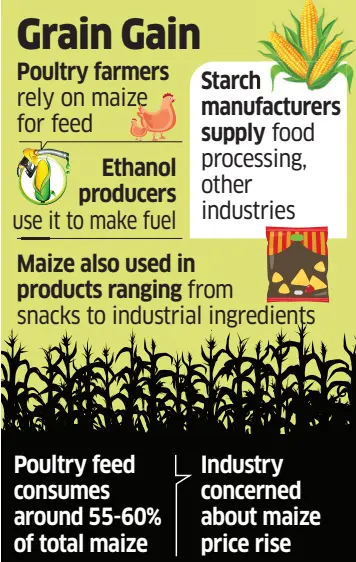
The tender, floated by Bharat Petroleum Corporation Ltd on 16 October, covers about 1,100 crore litres of ethanol for supply from 1 November 2026 to 31 October 2027. It bars diversion of sugar for ethanol, meaning no ethanol from sugarcane juice, sugar syrup or B-heavy molasses will be procured. ISMA wants the price for C-heavy molasses-based ethanol raised to Rs 62.23 per litre from Rs 57.97. AIDA has sought a revision of the incentive for maize-based ethanol, which has been cut from Rs 5.79 per litre to Rs 2.79.
Meanwhile, the Food Ministry on 22 October wrote to states and sugar mills enforcing the ban on ethanol from sugar-based feedstocks for the upcoming supply year. The move follows a sugar shortage in the 2025-26 season and expectations of a similar situation in 2026-27. The government has also extended the validity of raw sugar import permits until 31 December 2026.
Indian Opinion Analysis
ThePrint reports industry associations supporting the government's overall approach while seeking price revisions, framing the story as a constructive dialogue. The Economic Times focuses on a drought-driven maize crunch that pits poultry, ethanol and starch makers against each other for priority access, highlighting a resource conflict that the tender's incentives may aggravate. BusinessLine reports the Food Ministry's enforcement letter as a regulatory directive, emphasising the government's response to sugar shortage. Where ThePrint and BusinessLine treat the maize incentive cut as a side note, the Economic Times centres it as a flashpoint. The three together show a government trying to manage competing demands of food security, fuel blending and industry viability, with the tightest pressure point being maize allocation. The concrete next step is the start of the ethanol supply year on 1 November 2026, when procurement allocations will begin.
Coverage: 3 sources, 3 neutral
Sources (3): theprint.in (neutral report), economictimes.indiatimes.com (neutral report), thehindubusinessline.com (neutral report)
This brief was synthesised by AI from the 3 sources linked above, so one read covers every framing they carry. Methodology and corrections.