
















Now Reading: GMR Airports plans Rs 19,400 crore expansion at Delhi and Hyderabad
-
01
GMR Airports plans Rs 19,400 crore expansion at Delhi and Hyderabad

GMR Airports plans Rs 19,400 crore expansion at Delhi and Hyderabad


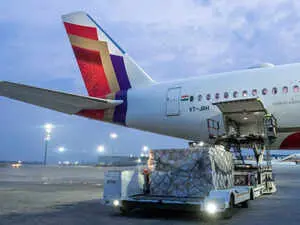
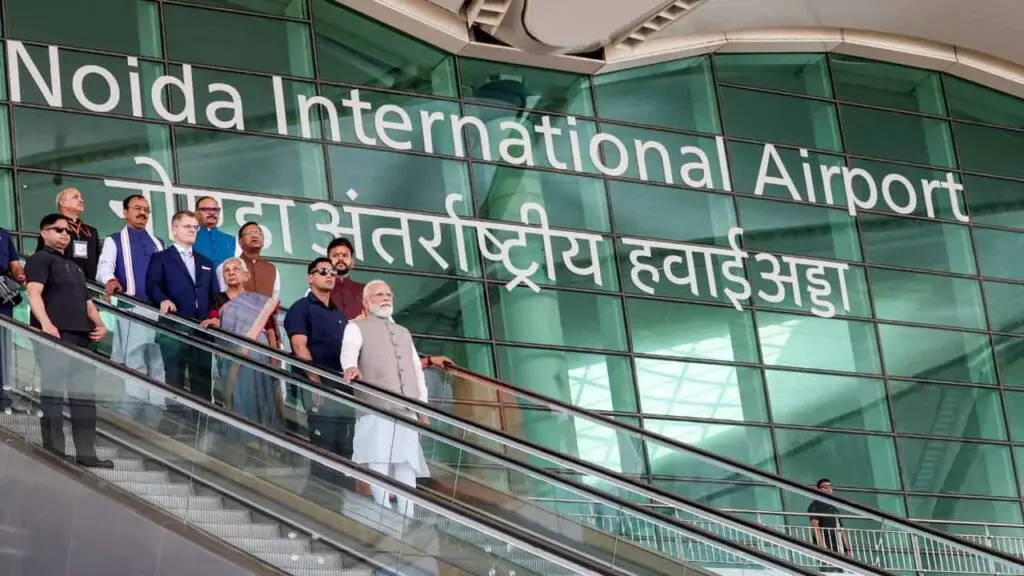
GMR Airports Ltd plans to invest up to Rs 19,400 crore over the next five to seven years to expand and modernise its airports in New Delhi and Hyderabad, company executive director Saurabh Chawla said in an interview. The investment reflects confidence in India's fast-growing aviation market, with GMR being the largest airport operator by annual passenger traffic and a major rival to Adani Airport Holdings Ltd.

Around Rs 13,800 crore will be spent on Hyderabad's Rajiv Gandhi International Airport, aiming to boost annual passenger capacity to nearly 80 million from the current 34 million. Up to Rs 5,600 crore will be used to upgrade Delhi's Indira Gandhi International Airport. The respective airport ventures will fund the projects through debt and equity, not directly by the holding company.
India is the world's third-largest domestic aviation market. Government estimates project passenger traffic could grow six-fold to about 1.1 billion over 14 years. GMR's portfolio includes six Indian airports, one in the Philippines and one under construction in Greece. Plans for Nagpur airport, taken over in June 2026, are under discussion. The company does not plan to enter the airline business even if rules are changed, Chawla said.
Indian Opinion Analysis
Both sources report the same facts from the same interview, making this a straight wire-style story. Freepressjournal.in leads with the total investment figure and notes the rivalry with Adani, while ThePrint leads with the dollar equivalent and the Adani rivalry, adding context about the policy change under discussion. Neither source offers independent analysis or criticism. The key takeaway is the scale of GMR's bet on aviation growth, with Hyderabad receiving the larger share. Watch for whether government passenger traffic projections materialise and how the Nagpur plan shapes up.
Coverage: 2 sources, 2 neutral
Sources (2): freepressjournal.in (neutral report), theprint.in (neutral report)
This story was synthesised by AI from the 2 sources linked above. Methodology and corrections.
Updated: this story now draws on 2 sources.