











Now Reading: GST reverse charge on used cooking oil, plastic, tyre and e-waste from 1 November
-
01
GST reverse charge on used cooking oil, plastic, tyre and e-waste from 1 November

GST reverse charge on used cooking oil, plastic, tyre and e-waste from 1 November

The Story in Brief
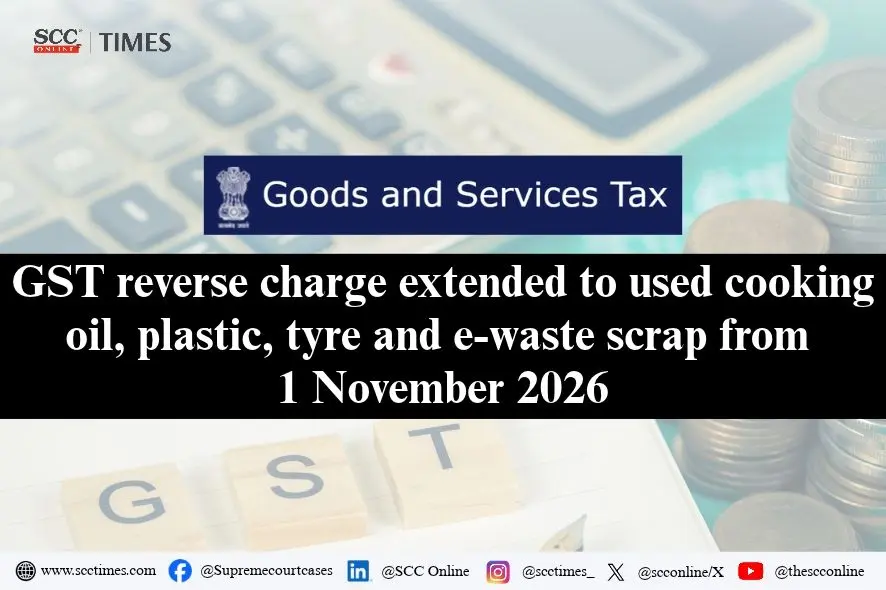
The Central Government has extended the GST reverse charge mechanism to four categories of waste and scrap supplied by unregistered persons to registered persons, effective 1 November. The goods covered are used cooking oil, waste and scrap of plastics, waste and scrap of tyres, and electrical and electronics waste and scrap.
The notification, issued on 27 October based on GST Council recommendations, applies under Section 9(3) of the CGST Act for intra-State supplies, Section 5(3) of the IGST Act for inter-State supplies, and Section 7(3) of the UTGST Act for supplies within Union Territories. All provisions of the respective Acts will apply to recipients. The measure shifts the tax payment obligation from the supplier to the buyer when the supplier is unregistered.
Indian Opinion Analysis
The notification shifts the GST compliance burden from the seller to the buyer for four waste categories, effectively bringing unregistered scrap dealers into the tax net without registering them. Registered businesses that purchase used cooking oil, plastic scrap, tyre scrap or e-waste from unregistered suppliers from 1 November must self-assess and pay the GST. This closes a gap where unregistered dealers collected GST from buyers but did not remit it to the government. The practical impact falls on recyclers, refiners and manufacturers who rely on informal supply chains, they will now need to track every purchase from an unregistered party and ensure reverse charge payment. The GST Council's choice of categories suggests the government is targeting high-value waste streams where tax leakage was concentrated.
Source: scconline.com
This brief was synthesised by AI from the source linked above. Methodology and corrections.