














Now Reading: US can keep Iran naval blockade indefinitely, says Hegseth
-
01
US can keep Iran naval blockade indefinitely, says Hegseth



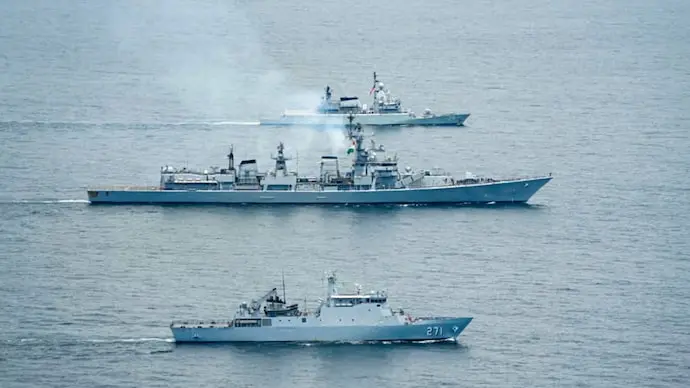
US Defence Secretary Pete Hegseth said the US Navy can maintain its blockade of Iran indefinitely by rotating ships in and out of the region. He spoke in Panama after visiting the…
The Story in Brief
US Defence Secretary Pete Hegseth said the US Navy can maintain its blockade of Iran indefinitely by rotating ships in and out of the region. He spoke in Panama after visiting the USS Gridley. The standoff over the Strait of Hormuz is deepening, with Iran refusing to reopen the waterway until sanctions are lifted and assets released.

Tensions escalated after attacks on two Abu Dhabi National Oil Company vessels, which the UAE blamed on Iran. The International Energy Agency now expects global oil supply to fall by 4.3 million barrels a day. US Treasury Secretary Scott Bessent signalled more sanctions. Trump insists the US has 'total control' of the strait, but Iran continues to target commercial shipping.
The Indian Opinion
Both sides talk tough, but the gap between rhetoric and reality is growing. Washington claims a 'wall of steel' yet Iran still hits vessels. Tehran says it runs the strait but its navy is damaged. The real story is economic: oil flows are down and the IEA projects a 4.3 million barrel-a-day supply drop. Neither side can afford indefinite escalation. The test will come when fuel prices force voters to pick a side in the US midterms.
Sources (3): ndtv.com, livemint.com, indiatoday.in
This story was synthesised by AI from the 3 sources linked above.
Updated: this story now draws on 3 sources.