












Now Reading: How a male actor became the ideal Hindu wife in 20th-century India
-
01
How a male actor became the ideal Hindu wife in 20th-century India


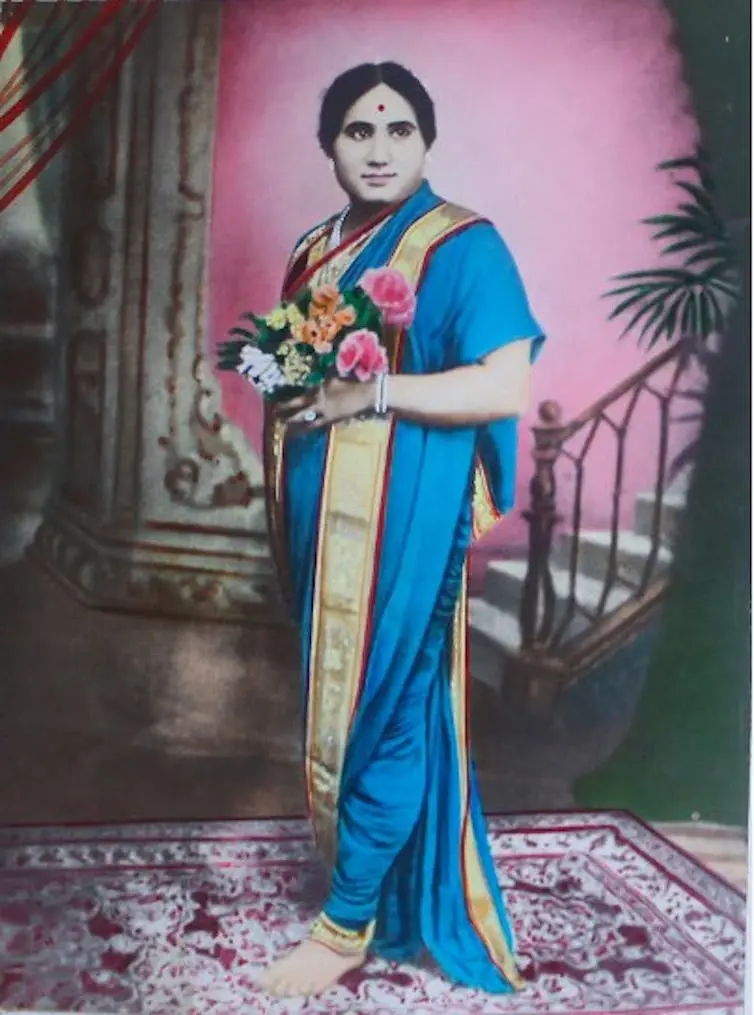
For much of the 20th century, the most admired wife in Marathi-speaking India was not a woman but Bal Gandharva (1888, 1967), a male impersonator of female roles in Marathi sangeet natak (musical theatre). His performances of devoted heroines set the standard for middle-class femininity, with film actresses trained to mimic his mannerisms well into the 1970s.
Gandharva's enactment of womanhood was shaped by the upper-caste, middle-class ethos of sangeet natak, which barred women from hereditary performing castes from the stage. Hindu nationalist leader Bal Gangadhar Tilak backed the theatre through his newspaper Kesari, lending it respectability. Gandharva's heroines, drawn from Hindu mythology, embodied stridharma (wifely devotion), turning suffering into a spectacle of fine saris and jewellery.
His image was later used to sell consumer goods like Gandharva toilet powder and Ayurvedic tonics, merging feminine virtue with marketable products. The same promotional portrait from his 1917 play Ekach Pyala, where he played the brutalised wife Sindhu, appeared on packaging, reinforcing the idea that only through stridharma could a woman earn redemption.
Indian Opinion Analysis
Gandharva's career flourished at a time when upper-caste Hindu reformers were codifying a new domestic ideal for women, partly as a response to colonial criticism of Indian society. The stage allowed this ideal to be mass-consumed before cinema took over. What is often overlooked is that Gandharva's performances also provided cover for a deeply gendered labour hierarchy: hereditary female performers were kept backstage while men took the spotlight. The commodification of stridharma through face powder and tonics foreshadowed modern brand endorsements that package moral virtue with consumer desire. The question that lingers is how much of this ideal survives in today's Marathi theatre and cinema, where female actors now play their own roles but still face pressure to embody a restrained, self-sacrificing femininity.
Source: theconversation.com
This story was synthesised by AI from the source linked above. Methodology and corrections.