














Now Reading: Hyderabad loses 200 hours a year to traffic and heat
-
01
Hyderabad loses 200 hours a year to traffic and heat



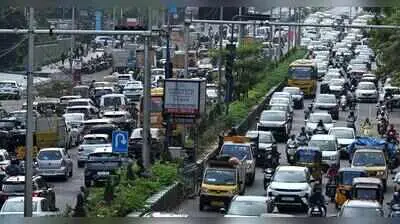
TomTom Traffic Index data shows Hyderabad commuters lose 123 hours annually to congestion, with a 10-km trip taking 32.37 minutes on average and dropping to 39.5 minutes during evening rush. The city's…
The Story in Brief
TomTom Traffic Index data shows Hyderabad commuters lose 123 hours annually to congestion, with a 10-km trip taking 32.37 minutes on average and dropping to 39.5 minutes during evening rush. The city's vehicle count has doubled to 80 lakh in a decade, but road network and public transport have not kept pace. Retired CRRI engineer T Sathyanarayana Reddy said average speeds are barely 15 kmph and fall to 10 kmph in peak hours.
Separately, Climate Central analysis covering 1,338 cities found Hyderabad residents lose 75 hours of sleep each year due to high nighttime temperatures, with 7 hours directly attributable to climate change. Southern India reports 70 to 90 hours of annual heat-related sleep loss, well above the global average of 56 hours. The analysis warned that concrete and asphalt in dense urban areas retain heat, while air conditioning access remains unequal.
The Indian Opinion
The 123-hour traffic delay and 75-hour sleep loss figures are not just statistics. They expose twin failures: a city that doubled its vehicles without expanding roads or public transport, and an urban design that traps heat in concrete. The government's response has been piecemeal, flyovers and signal tweaks, while the real solution, a massive shift to buses and trains, remains underfunded. Watch whether the upcoming state budget allocates a larger share to the Hyderabad Metropolitan Development Authority or merely announces yet another road-widening project.
Source: timesofindia.indiatimes.com
This story was synthesised by AI from the source linked above.
Updated: this story now draws on 1 sources.