












Now Reading: ICE defends policy on body-camera footage as rollout nears
-
01
ICE defends policy on body-camera footage as rollout nears



US Immigration and Customs Enforcement (ICE) will equip every field officer and agent with body-worn cameras by the end of August, Acting Director David Venturella said on Saturday. The accelerated rollout follows…
The Story in Brief
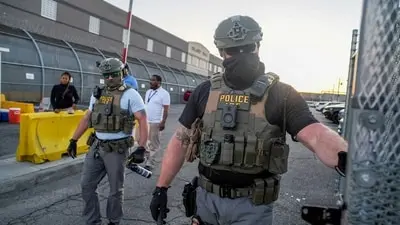
US Immigration and Customs Enforcement (ICE) will equip every field officer and agent with body-worn cameras by the end of August, Acting Director David Venturella said on Saturday. The accelerated rollout follows fatal shootings by ICE officers in Maine and Texas last month that sparked protests and intensified scrutiny over use of force and the absence of body cameras.
Venturella pushed back against an Associated Press report on ICE's policy that allows release of footage only when it is in the agency's "best interests". He said the policy is in line with other federal agencies and allows withholding footage only to protect investigations or privacy. The AP reported that ICE can indefinitely delay release if the director decides there are compelling objections that cannot be resolved by redaction.

The Indian Opinion
ICE says it is transparent, yet its own policy lets it withhold footage whenever it suits the agency. The claim that routine secrecy is written into policy, as the AP reports, is being dismissed by the acting director. But the fatal shootings in Maine and Texas, with no body cameras recording, show why the public is sceptical. The test will be whether ICE releases the first video under its own rules when a death occurs after August.
Sources (2): indiatoday.in, hindustantimes.com
This story was synthesised by AI from the 2 sources linked above.
Updated: this story now draws on 2 sources.