



















Now Reading: India and New Zealand sign pact for electronic origin data exchange
-
01
India and New Zealand sign pact for electronic origin data exchange


The Story in Brief
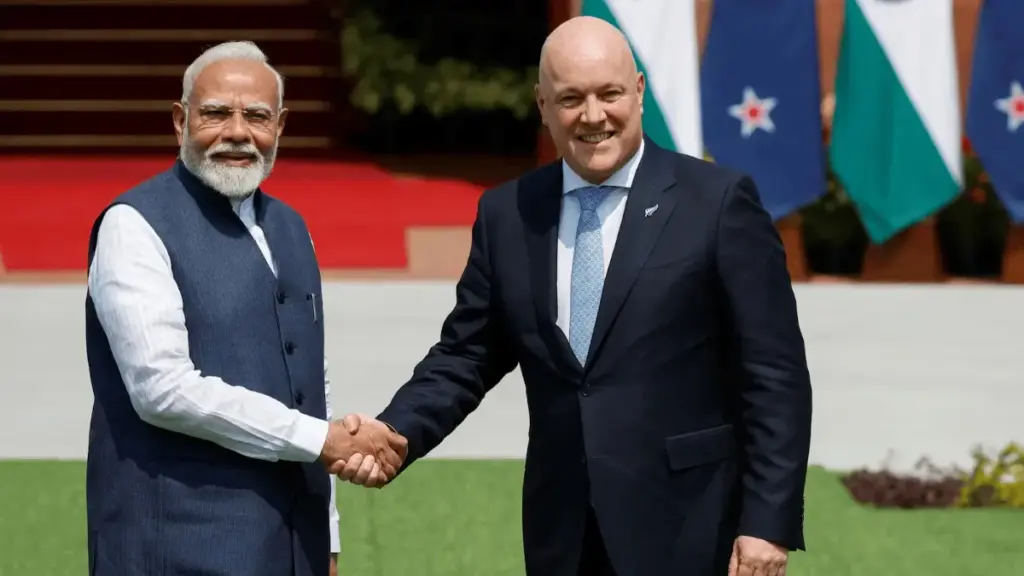
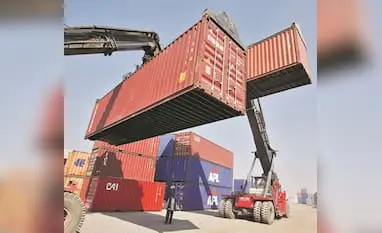
India and New Zealand signed a Memorandum of Cooperation on 19 October 2026 for electronic exchange of origin data on traded goods, the finance ministry said. The pact was signed by CBIC Chairman Vivek Chaturvedi and New Zealand Customs Service Comptroller Christine Stevenson. It is designed to improve customs cooperation, reduce information gaps and help businesses access tariff concessions under the India-New Zealand Free Trade Agreement, which came into force on 20 October.
The FTA gives 100% duty-free access for Indian goods entering New Zealand, covering sectors such as textiles, leather, footwear, pharmaceuticals and engineering goods. India has excluded dairy, onions, chickpeas, sugar and several other sensitive agricultural products. New Zealand has committed to invest $20 billion in India over 15 years, and both sides aim to double bilateral trade in goods and services to $7 billion by 2030.
The commerce ministry also notified tariff-rate quotas for apples, kiwifruit, Manuka honey and albumins from New Zealand, with calibrated volumes and minimum import price provisions. India is providing tariff concessions on 70% of its tariff lines, covering about 95% of current bilateral trade value.
Indian Opinion Analysis
News On Air (pro-government) and Business Today (pro-government) lead with investment and growth promises: the $20 billion commitment from New Zealand and a $7 billion trade target. The Indian Express and Orissa Post provide detailed sectoral breakdowns alongside those figures, while Livemint (neutral-report) and Business Standard (neutral-report) focus on operational details: the electronic origin-data exchange and the cautionary view from an analyst that zero-duty access does not guarantee commercial viability. Business Standard provides the most neutral, wire-service-style account of the customs MoC. The coverage is broadly celebratory, but Livemint alone flags logistics and compliance costs that could erode the tariff gains. The balanced reading: the FTA offers clear zero-duty access for Indian exports and investment pledges, but the real test, whether tariff savings survive freight and certification costs, will be measurable from export and repeat-order data in the next two to three years, as the analyst states.
Coverage: 8 sources, 3 pro-government, 5 neutral
Sources (8): business-standard.com (neutral report), newsonair.gov.in (pro government), businesstoday.in (pro government), livemint.com (neutral report), indianexpress.com (neutral report), orissapost.com (neutral report), economictimes.indiatimes.com (pro government), thehindubusinessline.com (neutral report)
This brief was synthesised by AI from the 8 sources linked above, so one read covers every framing they carry. Methodology and corrections.