


















Now Reading: India data centre boom faces security blind spot, power demand to surge 8-fold
-
01
India data centre boom faces security blind spot, power demand to surge 8-fold

India data centre boom faces security blind spot, power demand to surge 8-fold

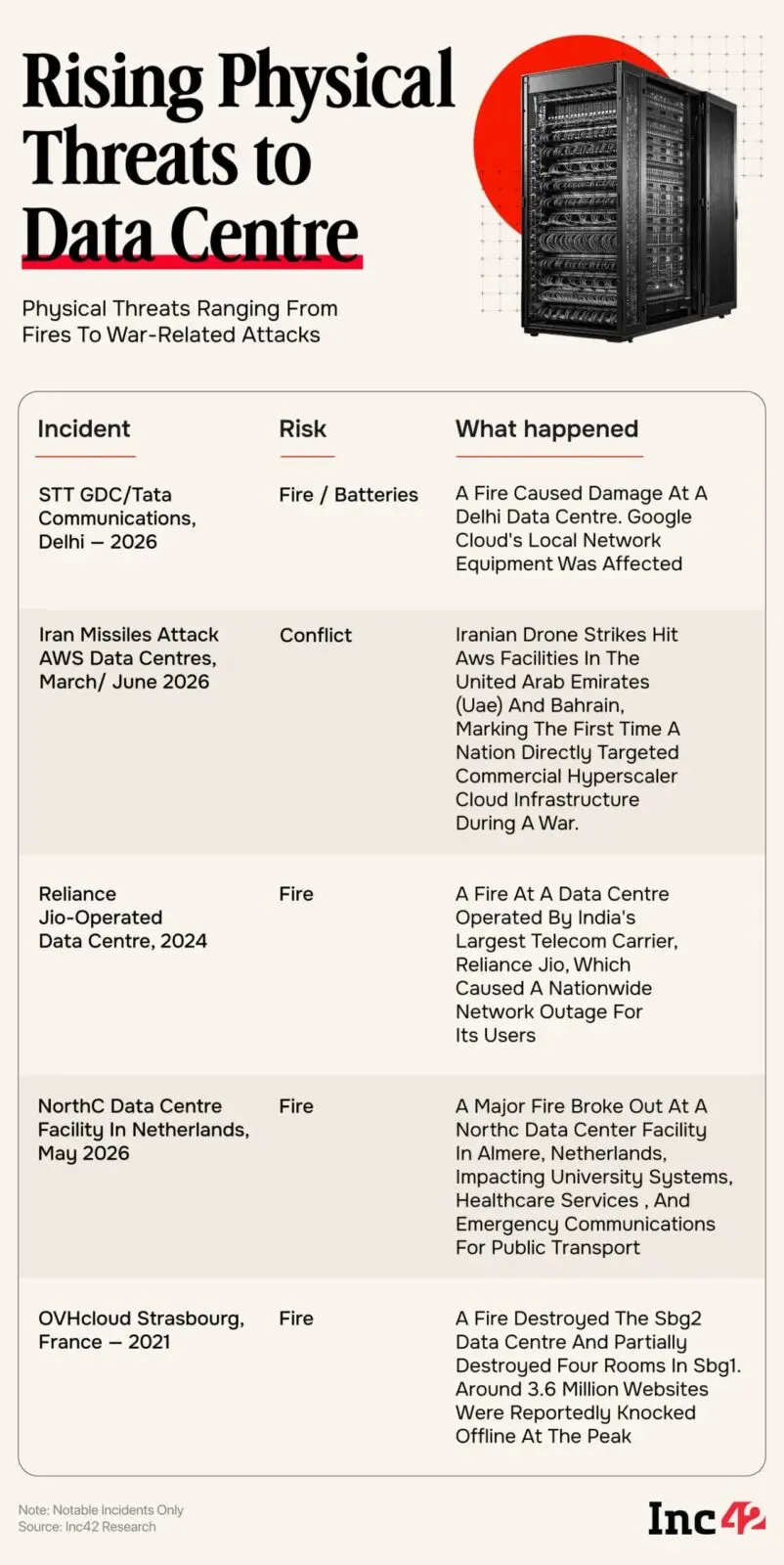
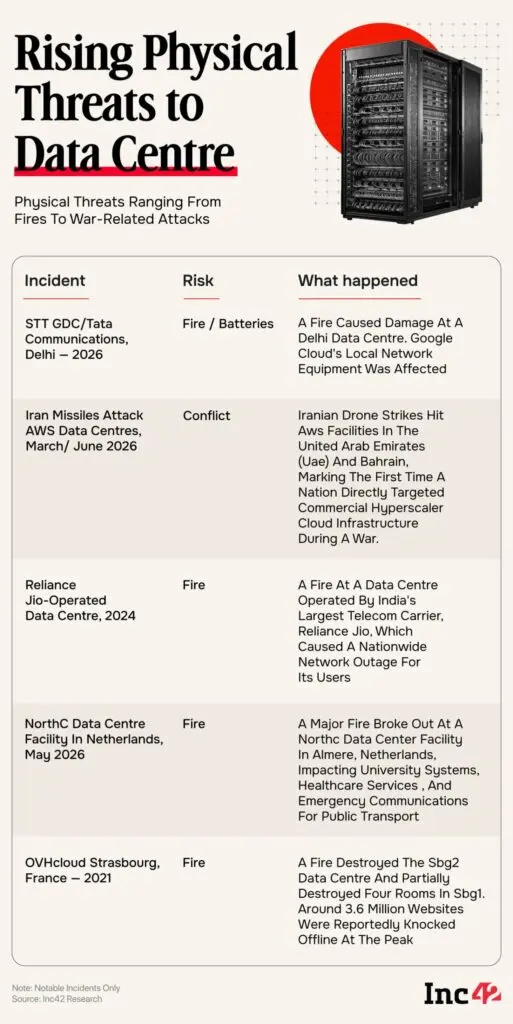
India's data centre industry is expanding rapidly, attracting $1.56 billion in foreign investment in the first half of 2026, driven by demand for AI and cloud services. However, a report by Inc42 warns that these facilities are increasingly becoming targets for cyberattacks, physical disruptions, and geopolitical threats. The warning follows a recent incident where nearly 19,000 files allegedly linked to the Kudankulam Nuclear Power Plant surfaced on the dark web after a ransomware group claimed a breach involving a contractor. Reliance Group acknowledged a partial breach of data stored on a server hosted by Yotta Data Services, which said it isolated the affected server.
According to BloombergNEF, India's data centre electricity demand is set to grow more than eightfold from 11 terawatt in 2025 to 91 terawatt by 2035, as under-construction hyperscale capacities come online. Global hyperscalers Google, Amazon, and Microsoft have announced $84 billion in investments, while domestic conglomerates Adani and Reliance have committed $210 billion. India's live IT capacity has quadrupled over six years to 1.7 GW, with 1.3 GW under construction and another 3.2 GW of approved projects.
Inc42 reports that human threats such as insider attacks and external manipulation are the biggest concern for data centres, followed by ransomware and AI-powered identity attacks. The average cost of a data breach in India has reached Rs 25.5 crore in 2026, up 15.9% from the previous year. Industry experts say contractual structures are increasingly defining cybersecurity responsibilities between data centre operators and their customers, with a growing focus on resilience, incident response, and compliance.
Indian Opinion Analysis
Inc42 frames the data centre expansion as a security risk, leading with the Kudankulam breach and expert warnings about cyber threats, while BloombergNEF's report is a neutral wire-style projection of power demand and investment. Inc42 emphasises contractual vulnerabilities and rising breach costs, but does not quantify the likelihood of such attacks relative to the scale of operations. A careful reader should note that while security risks are real, the industry is also building accountability through contracts and compliance frameworks. The key number to watch is India's data centre power demand trajectory, which will test both infrastructure and security readiness.
Coverage: 2 sources, 1 neutral, 1 sensationalist
Sources (2): inc42.com (sensationalist), energy.economictimes.indiatimes.com (neutral report)
This story was synthesised by AI from the 2 sources linked above. Methodology and corrections.
Updated: this story now draws on 2 sources.