











Now Reading: Commercial elder-care industry grows as families shrink
-
01
Commercial elder-care industry grows as families shrink


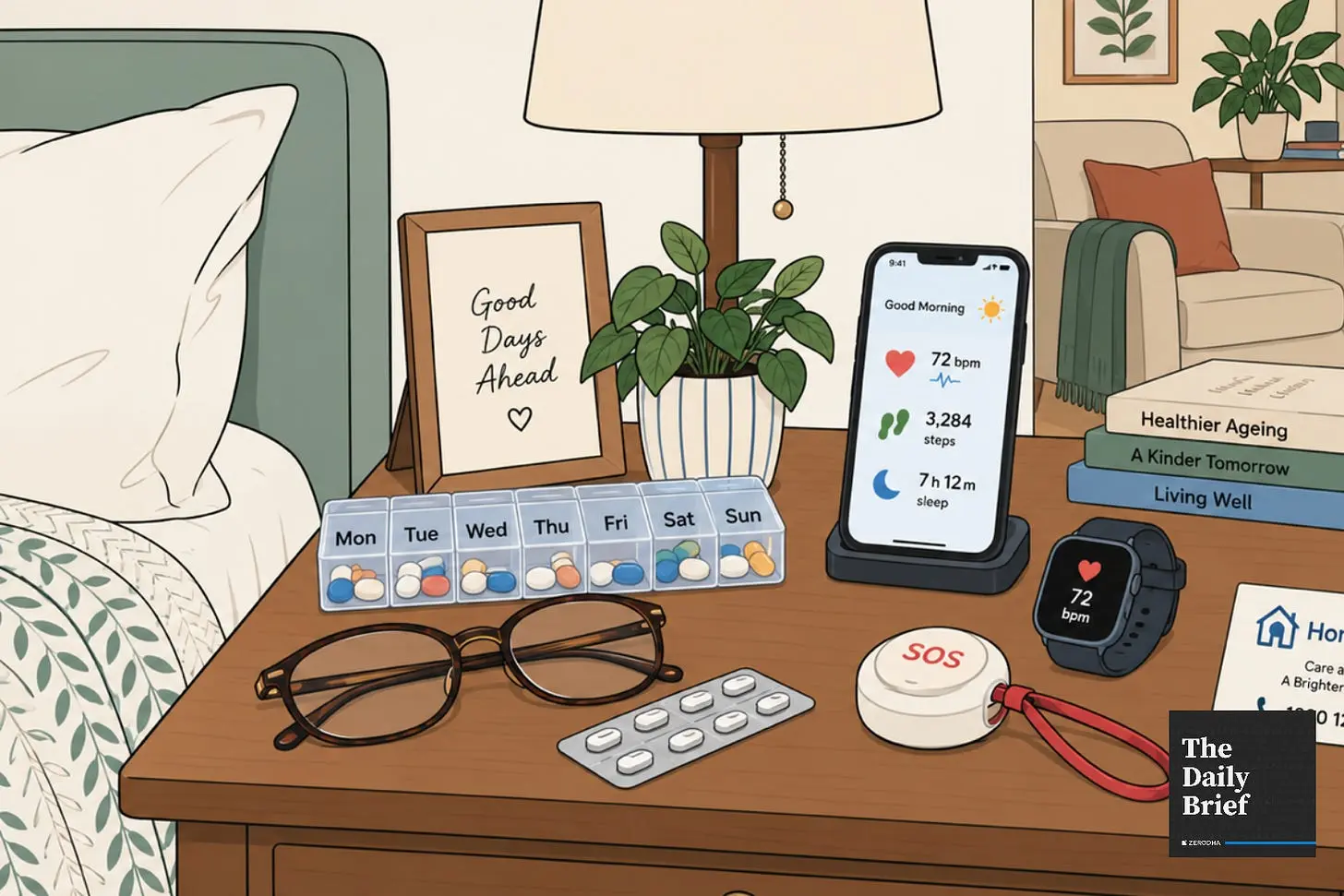
India's commercial elder-care industry is expanding as smaller families and migration erode the traditional joint-family support system. The country now has 167 million people aged 60-plus, a number projected to reach 346…
India's commercial elder-care industry is expanding as smaller families and migration erode the traditional joint-family support system. The country now has 167 million people aged 60-plus, a number projected to reach 346 million by 2050, while the fertility rate has fallen from 5.9 in 1950 to about 2.0. Three-quarters of Indians over 60 have at least one long-term illness, and one in four needs help with basic daily activities.
Companies now offer services ranging from 1,999 rupees a month for emergency-response subscriptions to assisted-living facilities costing over 1 lakh rupees. The industry has moved away from the stigma of old-age homes toward helping seniors stay independent with support added only as needed. However, the high monthly costs, shortage of trained caregivers, and the physical limits of local delivery mean organised care remains out of reach for most older Indians.
Indian Opinion Analysis
The coverage is uniformly neutral-report, a market-oriented explainer from The Daily Brief by Zerodha. No source frames the elder-care industry as government failure or success, all focus on demographic and market mechanics. The real constraint the report makes plain is affordability: a subscription at 1,999 rupees a month sits far from assisted living at over 1 lakh. The implication is structural: India's ageing population of 167 million will collide with a commercial care model that prices out most families. The next milestone to watch is the official share of secondary copper, already 42 percent of demand, as the urban mine's contribution to import substitution is quantified.
Coverage: 3 sources, 3 neutral
Sources (3): thedailybrief.zerodha.com (neutral report), linkedin.com (neutral report), thedailybrief.zerodha.com (2) (neutral report)
This brief was synthesised by AI from the 3 sources linked above, so one read covers every framing they carry.
Updated: this story now draws on 3 sources.