














Now Reading: India quick commerce market set to hit $70 to 90 bn by FY31: Redseer
-
01
India quick commerce market set to hit $70 to 90 bn by FY31: Redseer

India quick commerce market set to hit $70 to 90 bn by FY31: Redseer

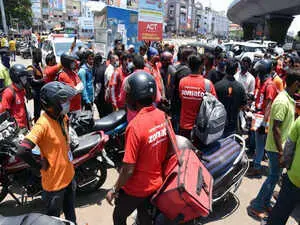
India's quick commerce market is projected to grow nearly five to seven times to $70 to 90 billion by FY31 from around $13 billion in FY26, according to a report by Google and Redseer Strategy Consultants. The report forecasts a compound annual growth rate (CAGR) of 41 to 48 per cent, with monthly transacting users expected to cross 100 million. Metros will contribute about 60 per cent of incremental growth, while quick commerce's share of metro retail spending could rise from 6 per cent to 20 to 23 per cent.
Non-grocery categories such as beauty and electronics are projected to grow from $3 billion in FY26 to $21 to 27 billion by FY31. The festive season is expected to see 110 per cent year-on-year sales growth, accounting for 18 per cent of total online festive spending. Outside metros, the addressable market includes over 200 million online shoppers across more than 300 cities. Key barriers identified include small basket sizes, freshness concerns and trust issues in non-metro markets.
Indian Opinion Analysis
All four sources report the same Google-Redseer projections with near-identical figures, differing only in emphasis. Business Standard leads with the $70-90 billion range and lists barriers first, while the others centre on the $90 billion ceiling and festive season growth. Fortune India foregrounds the shift from small orders to planned household baskets, and Times Now leads with the festive sales boost. None of the sources adopt a pro-government or critical stance, the coverage is uniform straight reporting of a market forecast. The next phase of expansion will depend on how platforms address the barriers named in the report: small basket economics, freshness and trust outside metros.
Coverage: 4 sources, 4 neutral
Sources (4): business-standard.com (neutral report), economictimes.indiatimes.com (neutral report), fortuneindia.com (neutral report), timesnownews.com (neutral report)
This brief was synthesised by AI from the 4 sources linked above, so one read covers every framing they carry. Methodology and corrections.