















Now Reading: India signs FTAs with EU, New Zealand under Viksit Bharat push
-
01
India signs FTAs with EU, New Zealand under Viksit Bharat push


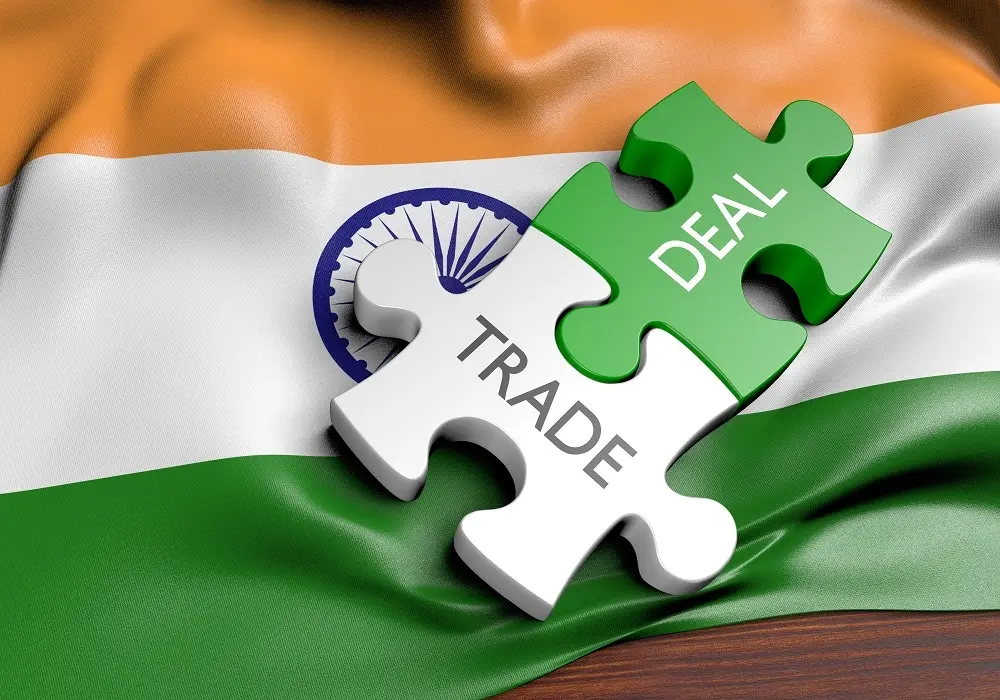
India has concluded free trade agreements (FTAs) with New Zealand and the European Union, advancing its Viksit Bharat 2047 goal. The India-New Zealand FTA, negotiated by December 2025, eliminates tariffs on 100% of India’s current exports and includes a binding investment commitment of $20 billion over 15 years. The EU-India pact, finalised in January after nearly two decades of talks, grants zero-duty access to the EU’s $263.5 billion textiles market and covers most goods lines for close to two billion consumers.
Ideas for India reports the deals aim to boost labour-intensive sectors such as textiles, apparel, leather, and engineering goods, while protecting sensitive agriculture and dairy items. Hindustan Times notes that the New Zealand FTA was the first Indian deal with a legally binding $100 billion investment target over 15 years, and that the EU agreement includes around 6,000 European companies already operating in India. Both pacts are part of a broader strategy that also includes FTAs with Australia, Japan, the UK, and the European Free Trade Association.
The New Zealand FTA awaits ratification, while the EU investment framework is being finalised. Hindustan Times reports that Prime Minister Narendra Modi has framed these deals as part of a five-to-seven-year sprint to achieve what earlier decades could not.
Indian Opinion Analysis
Ideas for India frames the New Zealand and EU trade deals as a deliberate, visionary step under the Viksit Bharat 2047 plan, praising zero-duty access and investment pledges without mentioning domestic pushback or implementation hurdles. Hindustan Times anchors the same deals to the Saptadhara seven-streams framework and fleshes out scepticism through concrete execution questions, noting that while deals are structurally aligned, ratification (New Zealand) and finalisation (EU) are pending. Neither source dwells on agriculture-sector exclusions or opposition from dairy and farmers' groups. The balanced takeaway: these are ambitious, fast-tracked agreements, but their transformative impact depends entirely on whether legally binding investment targets, $20 billion from New Zealand, trillions of yen from Japan, actually flow into agreed projects. Watch the EU ratification timeline and the Australia CECA close.
Coverage: 2 sources, 1 pro-government, 1 neutral
Sources (2): ideasforindia.in (pro government), hindustantimes.com (neutral report)
This story was synthesised by AI from the 2 sources linked above. Methodology and corrections.
Updated: this story now draws on 2 sources.