















Now Reading: India signs Rs 4,106 crore deals for GSAT-7C, Varunastra torpedo
-
01
India signs Rs 4,106 crore deals for GSAT-7C, Varunastra torpedo


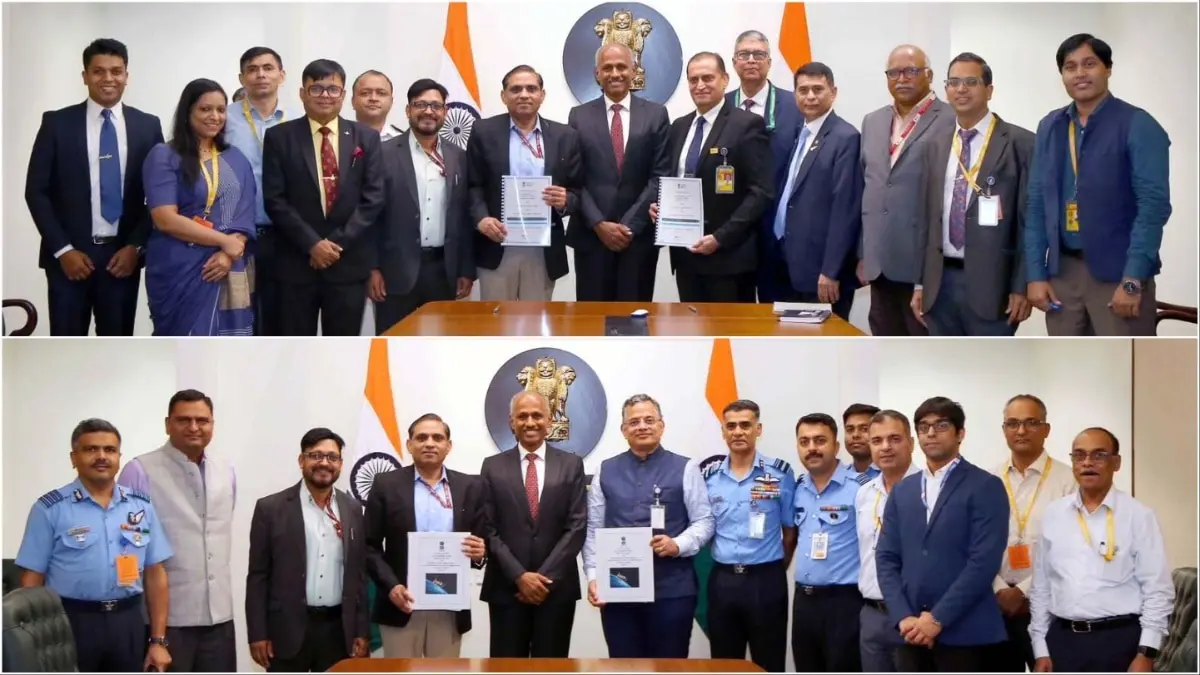
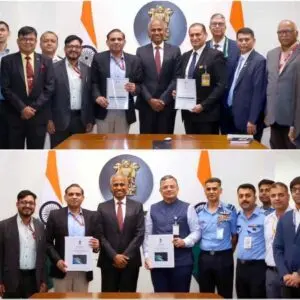
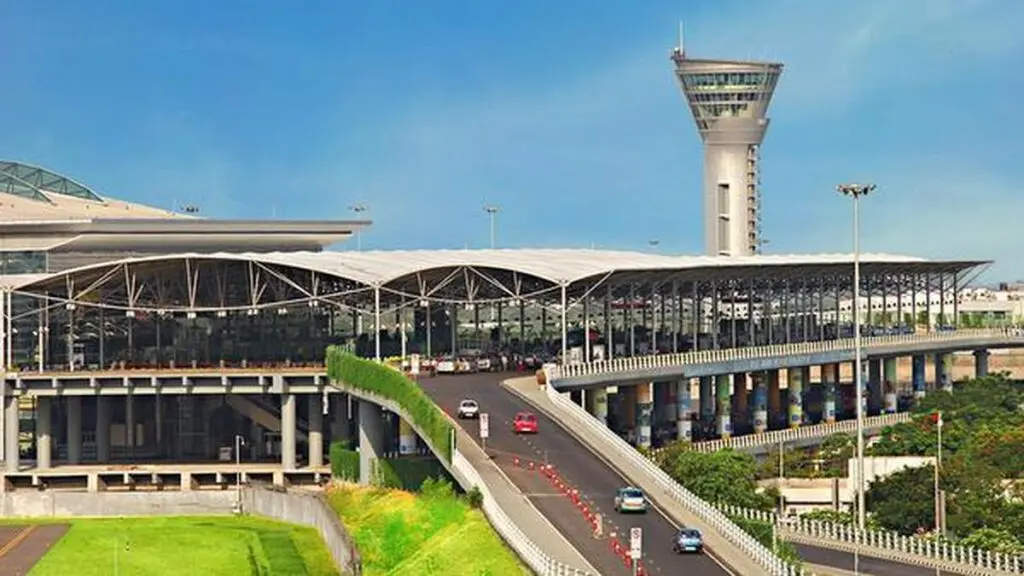
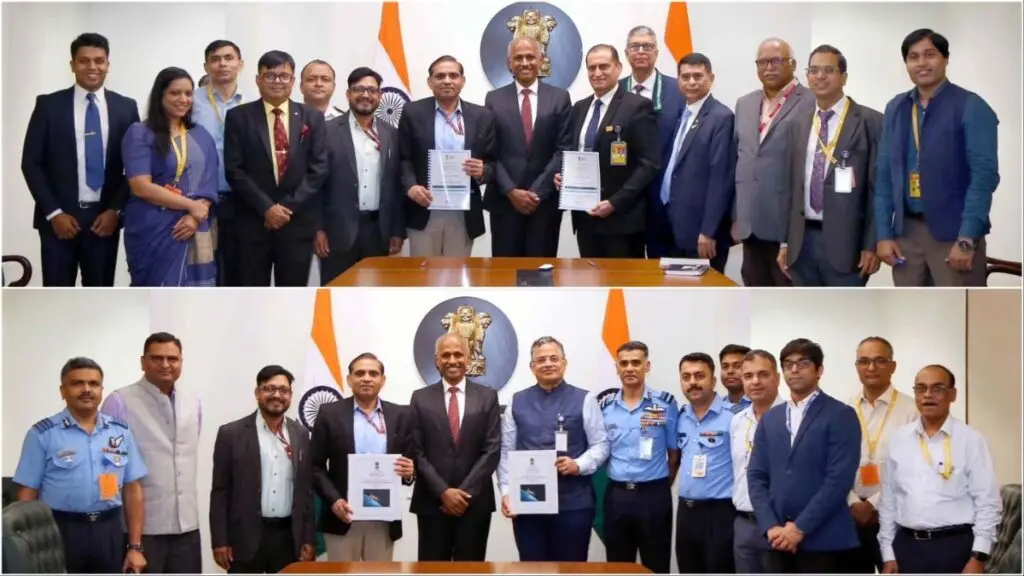
The defence ministry signed two deals worth a combined Rs 4,106 crore on 15 October at Kartavya Bhavan in New Delhi, attended by additional secretary and director general (acquisition) A. Anbarasu. The first deal, valued at Rs 2,563 crore with New Space India Limited (NSIL), Bengaluru, covers a dedicated communication satellite for the Indian Air Force: GSAT-7C. The second deal, worth Rs 1,543 crore with Bharat Dynamics Limited (BDL), Hyderabad, covers indigenously developed Varunastra heavy-weight torpedoes for the Indian Navy.
GSAT-7C is fully designed, developed and built with indigenous technology. It will provide secure, resilient, real-time connectivity between Air Force aircraft, radars, drones and command centres, even under enemy jamming or cyber attacks, using software-defined radio. The Varunastra torpedo, developed by the Naval Science and Technological Laboratory (NSTL), is a ship-launched anti-submarine weapon capable of targeting quiet submarines at long range, with a 250 kg warhead, speed of up to 40 knots and operating depth up to 600 metres.
Both deals are expected to strengthen the Air Force’s network-centric warfare capability and the Navy’s anti-submarine warfare readiness, especially in the Indian Ocean region. The contracts also support domestic defence firms NSIL and BDL, reduce dependence on foreign equipment and create jobs.
Indian Opinion Analysis
Both Business Today and Aaj Tak report the two defence deals with nearly identical factual details, including the combined cost of Rs 4,106 crore and the individual contract values. The coverage is uniform straight reporting: neither outlet questions the strategic rationale, the delivery timeline, or the cost. Both emphasise self-reliance, domestic firms NSIL and BDL, and the reduction of foreign dependency. Aaj Tak adds a mention of rising threats in the Indian Ocean region, while Business Today frames the deals as strengthening India’s military power. No critical framing, cost-benefit analysis or alternative sourcing appears in either report.
Coverage: 2 sources, 2 neutral
Sources (2): businesstoday.in (neutral report), aajtak.in (neutral report)
This brief was synthesised by AI from the 2 sources linked above, so one read covers every framing they carry. Methodology and corrections.