







Now Reading: India pushes for urgent UN Security Council reforms at open debate
-
01
India pushes for urgent UN Security Council reforms at open debate

India pushes for urgent UN Security Council reforms at open debate


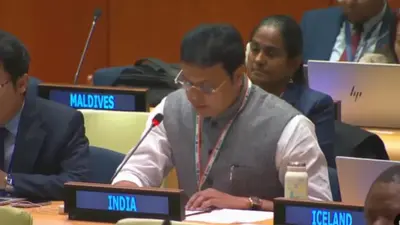
India called for urgent reforms in the United Nations Security Council (UNSC) at an open debate on its working methods on Wednesday. Addressing the meeting, Ambassador Yojna Patel, Charge d'Affaires at India's Permanent Mission to the UN, said the need to reform the Council is "more pronounced and pressing than ever before." She argued that the world of 1945 has changed, and the composition of the Council must reflect present-day realities, with greater representation for the Global South.

India sought expansion in both categories of UNSC membership through text-based negotiations with clear timelines. Patel also raised concerns about delays in appointing chairs of the Council's subsidiary bodies, calling for a "definitive and non-negotiable" timeline. She urged that non-permanent members have equal access to documents and that troop-contributing countries be part of decision-making on peacekeeping.
India specifically warned against using Council membership for narrow political interests, saying the sanctions listing and de-listing process must be transparent and objective. "Presence in the Security Council must not be instrumentalised to legitimise terrorists by attempting to de-list them," Patel said. The Economic Times reported the broad reform demands, while India Today highlighted the sanctions issue, noting that China has previously blocked Indian proposals to designate Pakistan-based terrorists.
Indian Opinion Analysis
Both sources report the same speech but lead differently. The Economic Times gives a straight, comprehensive account of India's reform demands across membership, working methods, and peacekeeping. India Today leads with the sharper angle on terror sanctions, quoting Patel's warning against using the Council for "narrow political interests" and explicitly naming China's past blocks on Indian proposals. The difference reflects India Today's editorial choice to foreground a bilateral tension, while The Economic Times offers a more diplomatic, process-oriented summary. A careful reader gets the full picture by combining both: India's call for UNSC reform is broad, but its specific frustration with opaque sanctions procedures and Chinese holds is the real driver.
Watch for whether Denmark's presidency manages to resolve the impasse on subsidiary body chairs before year-end.
Coverage: 2 sources, 2 neutral
Sources (2): economictimes.indiatimes.com (neutral report), indiatoday.in (neutral report)
This story was synthesised by AI from the 2 sources linked above. Methodology and corrections.
Updated: this story now draws on 2 sources.