












Now Reading: India urges UN to safeguard critical sea lanes and supply chains
-
01
India urges UN to safeguard critical sea lanes and supply chains


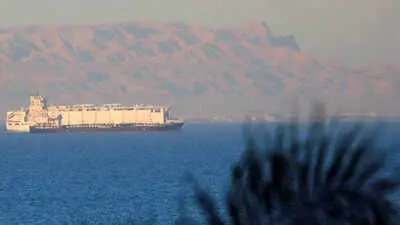
India has called on the international community to collectively safeguard critical sea lanes, saying secure maritime trade routes are indispensable for moving food, fertilisers and fuel. Speaking at a UN Security Council debate on Tuesday, Ambassador Harish Parvathaneni warned that disruptions to commercial shipping during conflicts can have cascading effects, disproportionately hitting developing countries.
The UN Secretary-General told the Council that 2025 saw the highest number of armed conflicts since WWII and at least 266 million people facing acute hunger. He noted that the Strait of Hormuz carries a fifth of global oil and a third of fertiliser trade, while attacks in the Red Sea threaten supply chains. India cautioned against over-reliance on any single production model, urging diversification and climate-resilient crops like millets.
Indian Opinion Analysis
India's call at the UNSC for safeguarding sea lanes and warning against over-reliance on single production models is reported with near-identical framing across all three outlets. Times of India, The Hindu, and Greater Kashmir all lead with India's diplomatic intervention and quote UN Secretary-General Guterres's stark data on conflicts and hunger. The coverage is uniform straight reporting: no source omitted or emphasised different details. The material difference lies in what the story itself omits: India's stance on the specific conflicts in Sudan, Gaza, and the Red Sea goes unspoken, leaving its position on these regional crises implied. The implications are clear: the UNSC debate next session will test whether this call for collective action translates into concrete measures.
Coverage: 3 sources, 3 neutral
Sources (3): timesofindia.indiatimes.com (neutral report), thehindu.com (neutral report), greaterkashmir.com (neutral report)
This brief was synthesised by AI from the 3 sources linked above, so one read covers every framing they carry. Methodology and corrections.
Updated: this story now draws on 3 sources.