

















Now Reading: Indian enterprise AI follows SaaS path with vertical models
-
01
Indian enterprise AI follows SaaS path with vertical models


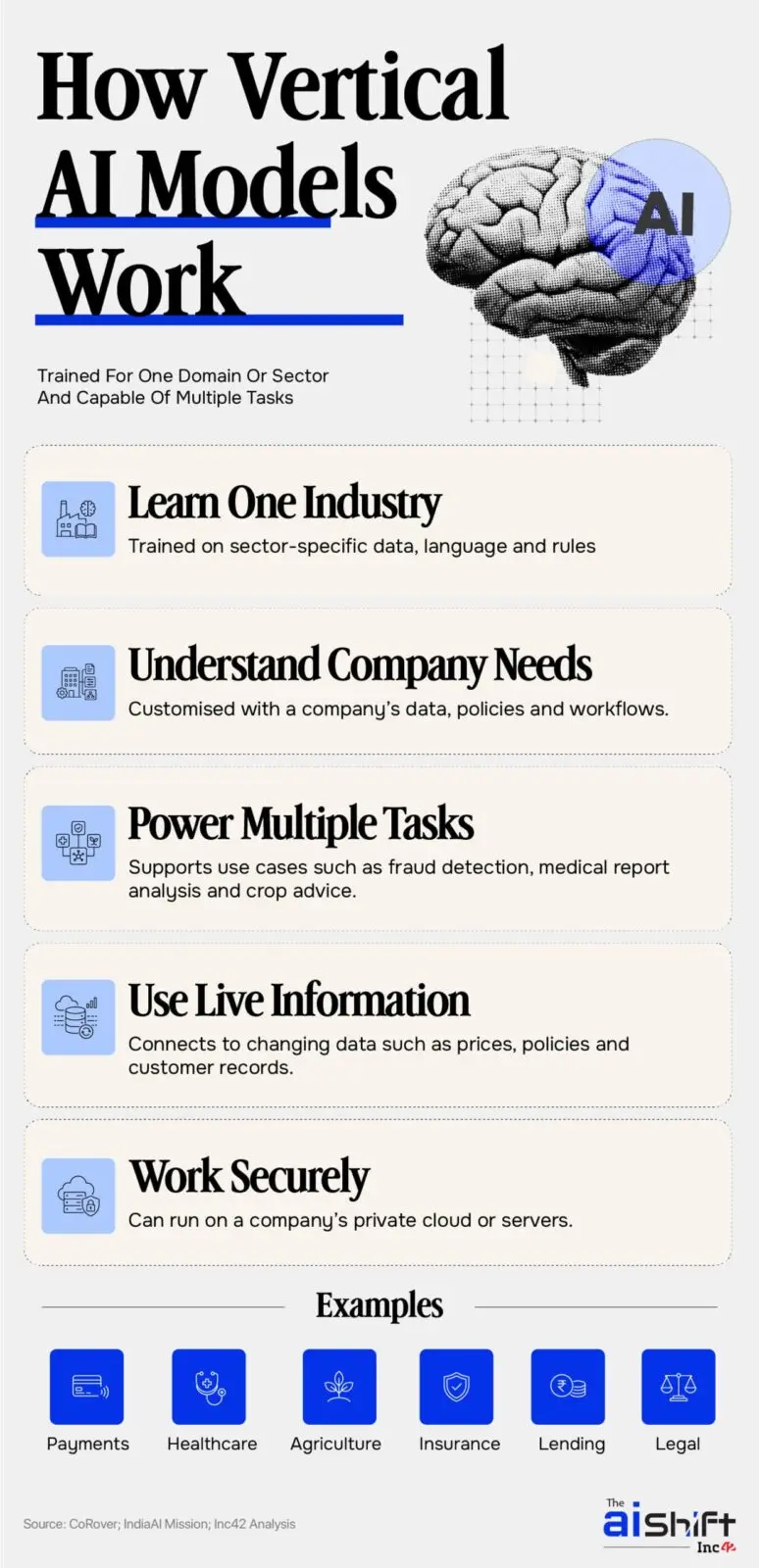
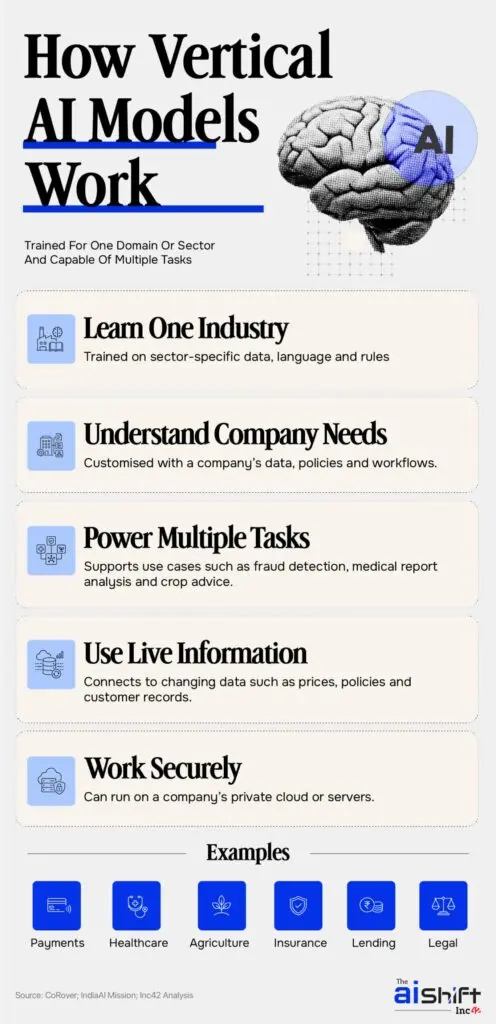
Enterprise AI in India is pivoting to vertical models trained on single-domain data, echoing the SaaS industry's shift a decade ago. Razorpay's Vulcan, Fractal's Vaidya.ai healthcare models, and BharatGen's ParamAgri and ParamLegal are among the first such specialised offerings.
Razorpay's chief product officer says general-purpose LLMs fail on payment transaction data, which contains tens of thousands of proprietary signals requiring millisecond decisions. Fractal's chief AI officer reports its smaller healthcare models compete with frontier models on benchmarks. BharatGen CEO Rishi Bal argues domain-specific training on a strong base model solves the problem of over-engineered general AI that burns tokens on narrow tasks.
Smaller vertical models can run on modest hardware, potentially giving startups AI access without fine-tuning frontier systems. Tech Mahindra earlier this year launched an 8 billion parameter Hindi-first LLM for education tutoring.
Indian Opinion Analysis
India's SaaS pivot to vertical solutions a decade ago was driven by the same logic now powering vertical AI models: generic tools failed where fragmented, domain-specific data and workflows met cost and latency constraints. The difference today is the underlying technology, models trained on proprietary payment signals or agricultural text can now rival frontier LLMs on narrow benchmarks, as Fractal's Vaidya.ai claims. That claim matters because enterprises still rely on general-purpose platforms for broad reasoning, vertical models will succeed only where token cost, latency or privacy justifies a separate stack. Razorpay, Fractal and BharatGen are betting that fintech, healthcare and legal are those sectors. The concrete watch item is whether Razorpay's Vulcan or Fractal's healthcare models achieve measurable lower fraud rates or faster diagnoses than GPT-based alternatives, data Razorpay and Fractal have not yet published.
Source: inc42.com
This brief was synthesised by AI from the source linked above. Methodology and corrections.