


















Now Reading: India’s oil import dependence crosses 90% in FY26
-
01
India’s oil import dependence crosses 90% in FY26


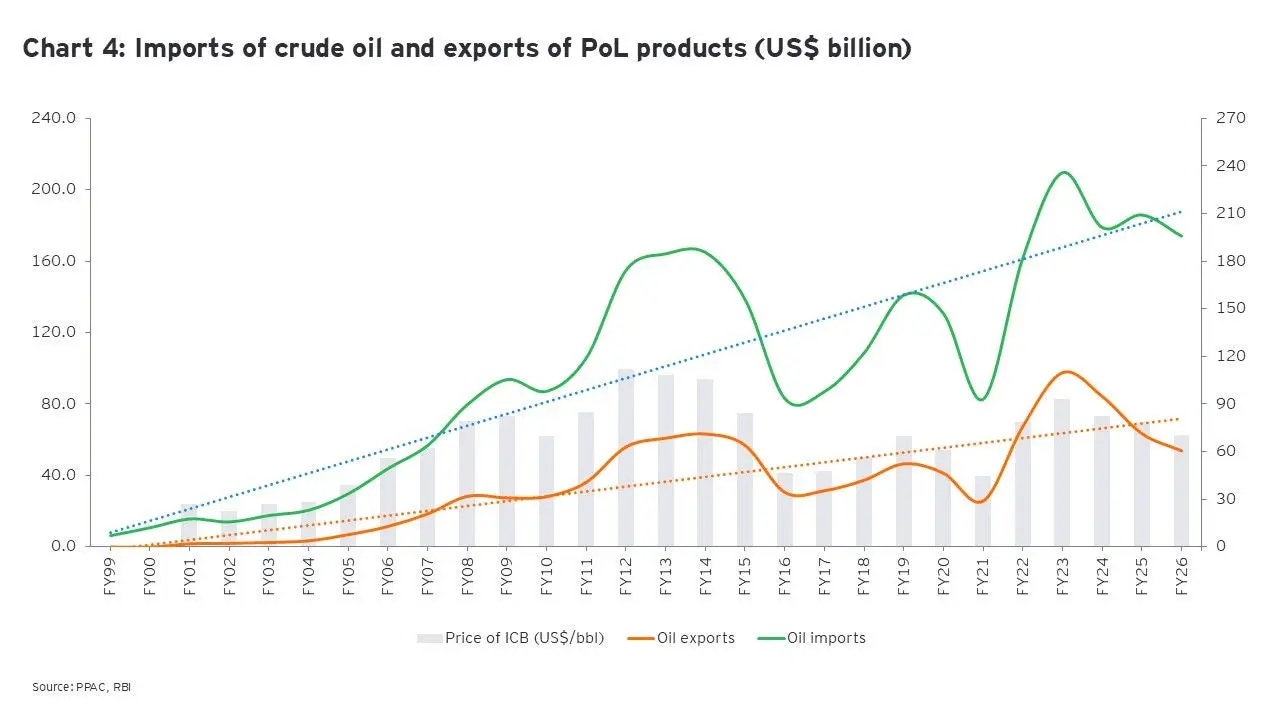
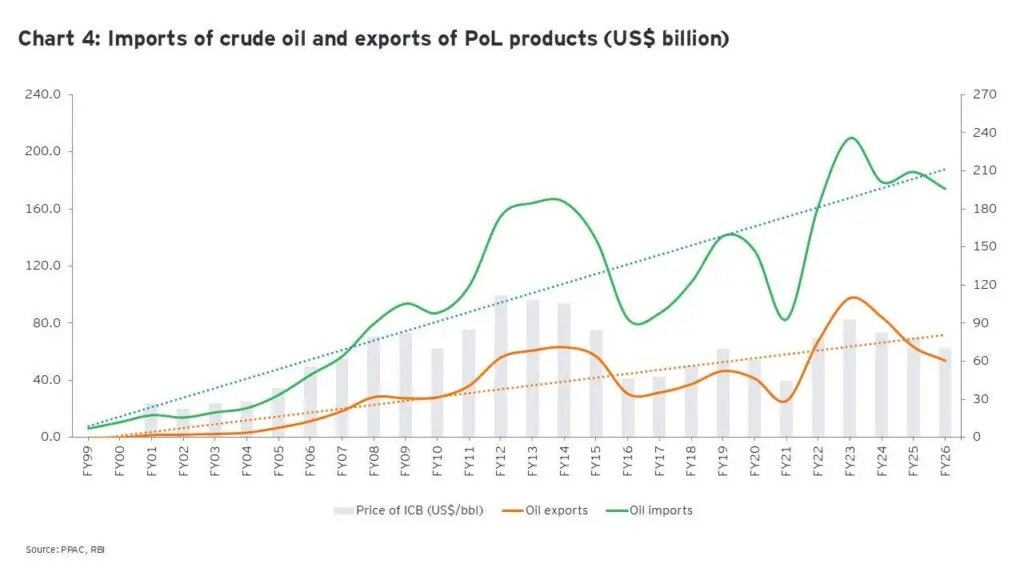
India's crude oil import dependence has risen to over 90% in FY26, up from 55% in FY99, according to a report by EY. The sharp increase highlights the country's growing vulnerability to global oil price shocks and supply disruptions.
The report notes that petroleum refining efficiency has improved by about 33% in FY26 compared to FY98. Meanwhile, the energy intensity of India's GDP, as well as the use of petroleum products in GDP, has declined over time, indicating some progress in energy efficiency.
Strengthening energy security is critical to mitigating macroeconomic risks, the report says. The findings underscore the need for India to diversify energy sources and boost domestic production to reduce reliance on imports.
Indian Opinion Analysis
India's import dependence is now among the highest globally for a major economy, making it extremely sensitive to geopolitical events like the Ukraine war or OPEC production cuts. The refining efficiency gains are welcome but do little to reduce the underlying import bill, which directly impacts the current account deficit and rupee stability. With global energy transition uncertain, the government's push for renewable capacity and electric vehicles becomes a strategic necessity, not just an environmental goal. The next key signal will be the trajectory of domestic crude output from fields like Rajasthan and the success of ethanol blending targets.
Source: ey.com
This story was synthesised by AI from the source linked above. Methodology and corrections.