


















Now Reading: Karnataka HC awards Rs 2.77 crore to man paralysed by tree branch
-
01
Karnataka HC awards Rs 2.77 crore to man paralysed by tree branch



The Karnataka High Court has ordered the Greater Bengaluru Authority (GBA) to pay Rs 2.77 crore compensation to Chandan G., a 39-year-old private firm employee who was left with 85% disability after…
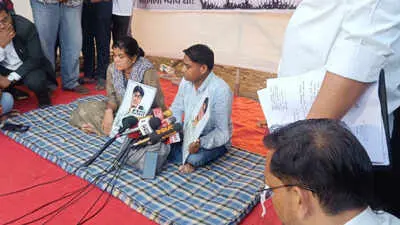
The Karnataka High Court has ordered the Greater Bengaluru Authority (GBA) to pay Rs 2.77 crore compensation to Chandan G., a 39-year-old private firm employee who was left with 85% disability after a Gulmohar tree branch fell on him in March 2024. The court held the civic body negligent for failing to act on a complaint from Good Shepherd Convent School, which had warned two weeks earlier that the branch could break anytime. Justice Suraj Govindaraj rejected the GBA's argument that the incident was an 'act of God', saying public authorities cannot escape liability for failing to discharge their duty.
The court also issued sweeping directions for a tech-driven public safety framework across Karnataka. It mandated a digital mechanism to log and track hazards such as dangerous trees, open manholes, and exposed electrical wires, with every report assigned a unique ID and time-bound response times. The system must accept inputs from citizens, police, and municipal staff, and vehicle-mounted cameras on public buses and garbage trucks will be used to spot hazards. AI may assist but cannot make final decisions.
The compensation includes Rs 1.17 crore for future medical care, Rs 1.03 crore for loss of earning capacity, and Rs 10 lakh for pain and suffering. The school must continue free education for the petitioner's daughter until Class 12. The GBA has 12 weeks to pay, and the court has left open the option for it to recover any share of liability from the school. The next compliance hearing is on January 5.
Indian Opinion Analysis
All three reports cover the same court order and compensation award, but they diverge in emphasis. The Times of India leads with the Rs 2.8 crore figure and the human story of the victim's 85% disability, while The Hindu's first piece foregrounds the GBA's negligence and the court's rejection of the 'act of God' defence. The Hindu's second piece shifts entirely to the court's 52-point public safety framework, treating the compensation as background. The Times of India gives the framework equal weight in its second half. No source is pro-government or critical: all are neutral-report, but the choice of lead frames the story differently. The balanced reading is that the court both provided individual remedy and attempted systemic reform, with compliance to be tested on January 5.
The combined coverage of compensation and structural directions means the January 5 compliance hearing will determine whether the framework moves from a judicial directive to operational reality.
Coverage: 3 sources, 3 neutral
Sources (3): timesofindia.indiatimes.com (neutral report), thehindu.com (neutral report), thehindu.com (2) (neutral report)
This brief was synthesised by AI from the 3 sources linked above, so one read covers every framing they carry.
Updated: this story now draws on 3 sources.