




















Now Reading: Life-cycle funds or DIY portfolio: experts weigh 30-year investing options
-
01
Life-cycle funds or DIY portfolio: experts weigh 30-year investing options

Life-cycle funds or DIY portfolio: experts weigh 30-year investing options

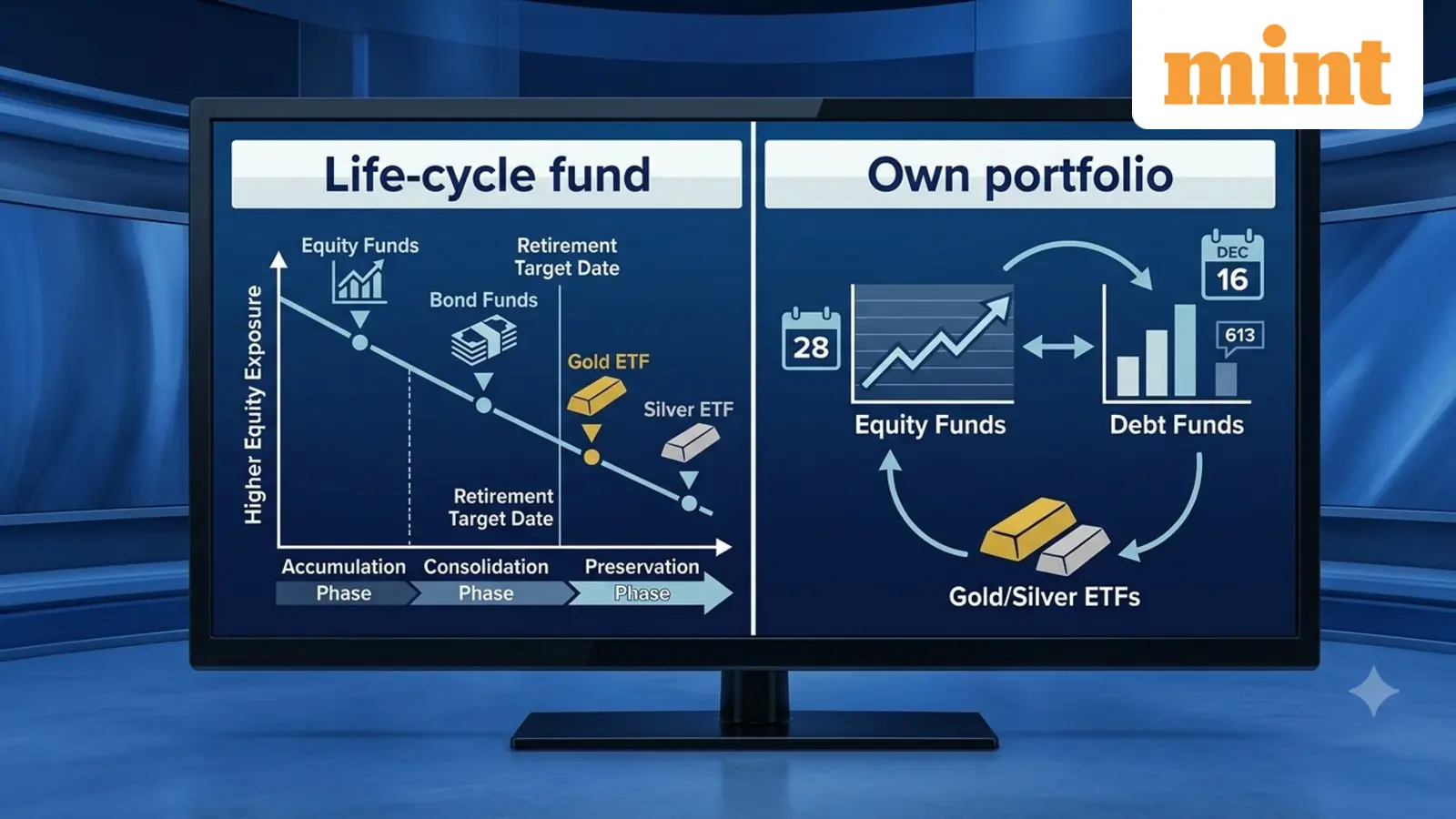
Investors planning for goals 30 years away can choose between life-cycle funds, which automatically adjust asset allocation over time, and do-it-yourself portfolios of equity, debt, and gold or silver ETFs. SEBI allows…
Investors planning for goals 30 years away can choose between life-cycle funds, which automatically adjust asset allocation over time, and do-it-yourself portfolios of equity, debt, and gold or silver ETFs. SEBI allows life-cycle funds with maturities of 5, 10, 15, 20, 25, and 30 years, with equity exposure declining from up to 95% to as low as 5% in the final year.
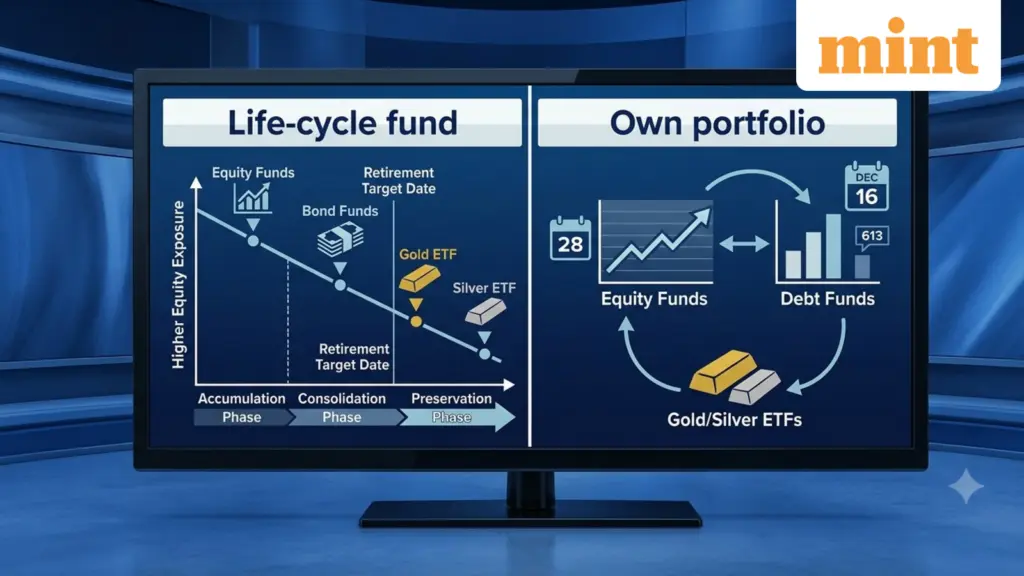
Seven life-cycle schemes from Zerodha Fund House, ICICI Prudential, and Mirae Asset are currently available, with horizons up to 30 years. Experts say life-cycle funds suit investors who will never rebalance, while a DIY portfolio offers greater control over allocation and tax efficiency. The choice depends on whether the goal date is fixed, such as a child's college admission, or flexible, like a home purchase.
Indian Opinion Analysis
SEBI's March 2026 master circular restricts asset management companies from launching life-cycle funds if they already run retirement or children's funds. This limits which houses can offer new products. The seven available schemes are concentrated among three AMCs, with none covering 20-year or 25-year maturities yet. Investors choosing life-cycle funds avoid capital gains tax on internal rebalancing, unlike a self-built portfolio where switching funds triggers tax. The practical trade-off: a life-cycle fund offers hands-off discipline, but the investor cannot adjust allocation outside SEBI's prescribed bands, and exit loads may penalise early withdrawal if the goal date changes.
Source: livemint.com
This brief was synthesised by AI from the source linked above. Methodology and corrections.