





















Now Reading: RBI bars harassment, limits device locks after loan defaults
-
01
RBI bars harassment, limits device locks after loan defaults


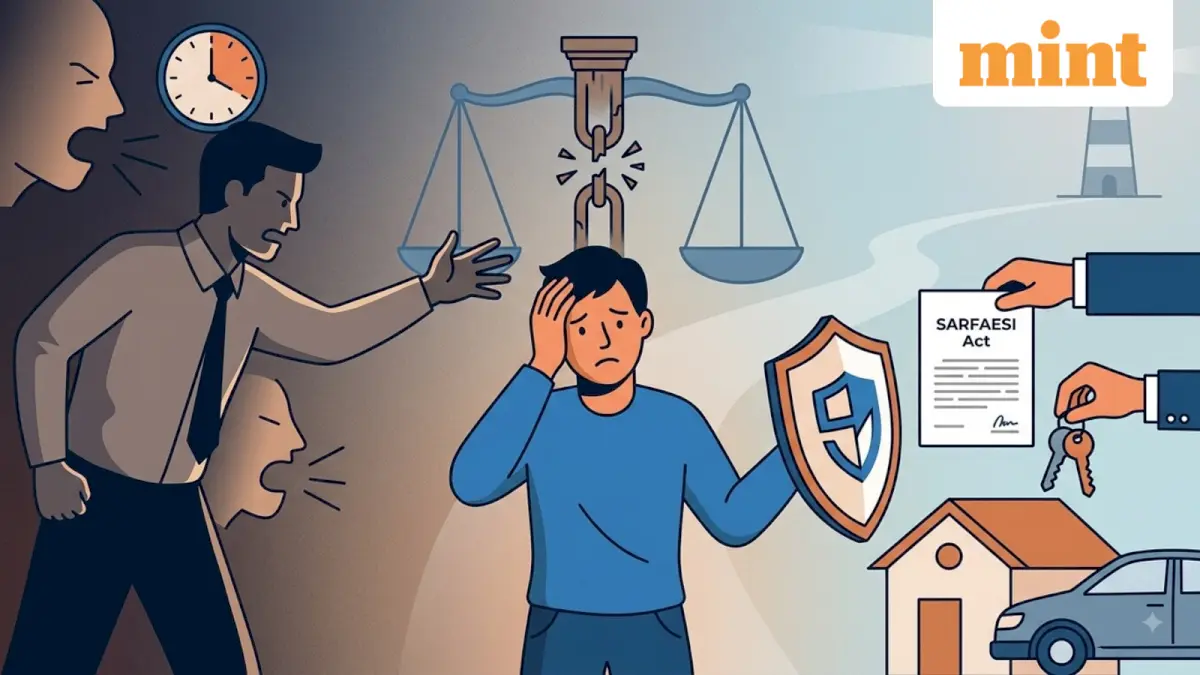
A missed EMI does not immediately allow a bank to seize property or assets, Mint reports. For secured loans, lenders must follow legal procedures, including a 60-day demand notice under the SARFAESI…
The Story in Brief
A missed EMI does not immediately allow a bank to seize property or assets, Mint reports. For secured loans, lenders must follow legal procedures, including a 60-day demand notice under the SARFAESI Act after an account becomes a non-performing asset. Recovery agents cannot threaten, abuse, shame borrowers or make calls before 8 a.m. or after 7 p.m. Banks remain responsible for outsourced agents.
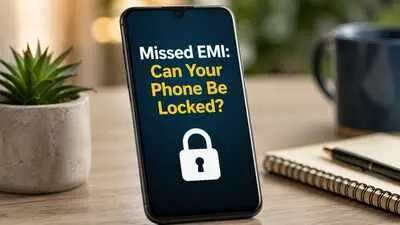
The Times of India reports that RBI’s final recovery framework, effective from January 1, 2027, will allow gradual restrictions only on a device financed through that specific loan. Restrictions cannot stop calls, SMS, emergency services or work-related functions. Lenders cannot access contacts, photos or call records. Devices must be unlocked within an hour of payment, with compensation of Rs 250 per hour for delays, up to the loan amount.
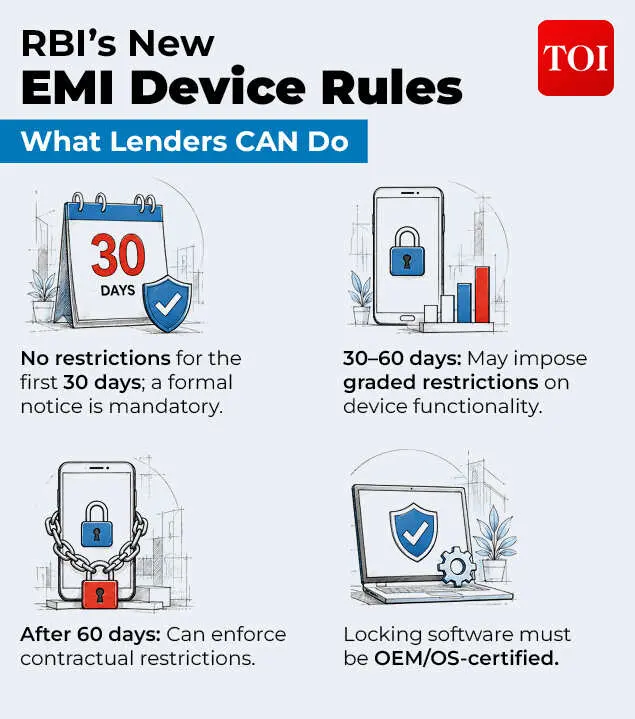
The Indian Opinion
The lazy claim that any missed EMI lets a bank take a home or switch off a phone is wrong. So is the opposite idea that borrowers can ignore recovery notices. The real test is whether lenders follow notice periods, document their action and protect essential device functions. From January 2027, the written loan agreement and the date of default should settle whether a device restriction was lawful.
Sources (2): livemint.com, timesofindia.indiatimes.com
This story was synthesised by AI from the 2 sources linked above.
Updated: this story now draws on 2 sources.