














Now Reading: Maharashtra protest music evolves from Gondhal to hip-hop
-
01
Maharashtra protest music evolves from Gondhal to hip-hop


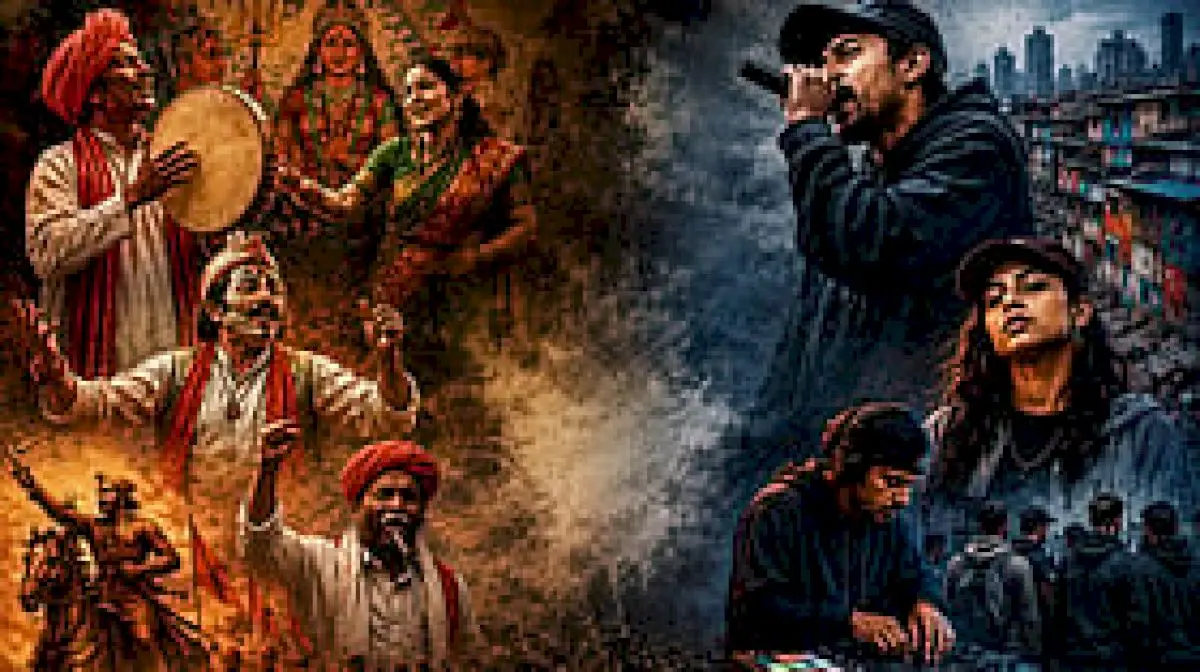
Maharashtra’s tradition of protest music has found a new voice in hip-hop and rap, blending centuries-old folk forms like Gondhal, Bharud, and Shahiri with digital beats. The Free Press Journal reports that…
Maharashtra’s tradition of protest music has found a new voice in hip-hop and rap, blending centuries-old folk forms like Gondhal, Bharud, and Shahiri with digital beats. The Free Press Journal reports that artists today fuse traditional instruments with modern genres to address caste, labour, and educational justice, continuing a lineage that stretches from saint-poets to revolutionary Shahirs.
Composer Sambhaji Bhagat, whose music inspired the film Court, treats protest songs with analytical rigour, consulting sociologists to understand Gen Z movements before blending folk with hip-hop or film music. “Art, music, and voice become tools against cultural hegemony because a voice cannot be shot,” he says. Activist Sunil Kadam, drawing on four decades of street performance, notes that protest music has moved through Gandhian, Marxist, and Ambedkarite streams, and now adapts to smartphone-era distribution.
Abhirup Kadam, a performer and educator, argues that rap is “non-different” from traditional Lokgeet or Powadas, calling it a newer medium for the same timeless ideologies. The article traces this evolution from the medieval saint-poets to the COVID-era use of folk forms for public health messaging, concluding that Maharashtra’s dissent music remains a dynamic social tool, not a museum piece.
Source: freepressjournal.in
This story was synthesised by AI from the source linked above. Methodology and corrections.