













Now Reading: VB-G RAM G replaces MGNREGA with 125 work days, state cost share
-
01
VB-G RAM G replaces MGNREGA with 125 work days, state cost share



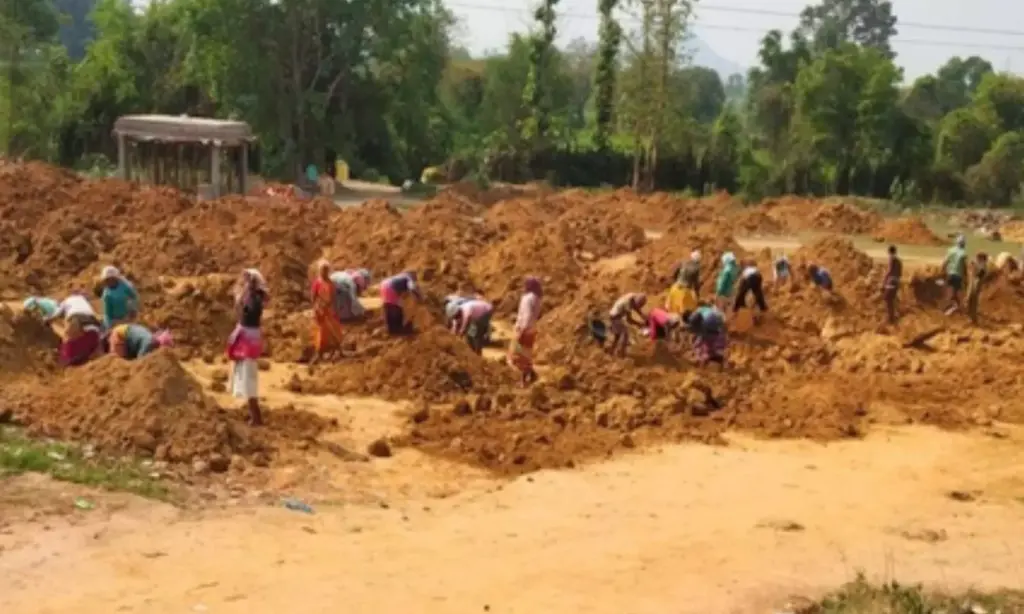
On July 1, 2026, the Centre repealed MGNREGA and replaced it with the Viksit Bharat, Guarantee for Rozgar and Ajeevika Mission (Gramin), or VB-G RAM G. The new law raises guaranteed employment from 100 to 125 days per rural household, shifts the Centre-state funding ratio to 60:40 for most states, and focuses works on water, infrastructure, livelihoods and climate resilience. The Centre has allocated Rs 95,692.31 crore for 2026-27, with the total outlay estimated to cross Rs 1.51 lakh crore including state contributions.
Times of India reports that 5.20 crore person-days were generated by July 22, with over 99.5% of applicants offered work, and that 62.20 crore person-days have been generated against a 95.03 crore target, of which 16.84% went to SC workers. The Hindu reports a 40% drop in employment generation in July 2026 compared to July 2025, and a 43% decline in April-July 2026 person-days (70 crore) versus the average of the preceding two years (128 and 119 crore). The Hindu says employment fell 60-85% in 10 major states including Madhya Pradesh, Uttar Pradesh and Jharkhand, and that confusion during the transition caused work to stop in many districts.
The Centre says the scheme remains demand-driven and that workers retain the right to demand work and unemployment allowance. The Hindu calls the launch a damp squib and warns that wage payments may face problems due to mandatory facial recognition, while Times of India reports the government's position that the normative allocation formula is linked to financial apportionment, not demand.
Indian Opinion Analysis
Times of India frames the transition as an orderly upgrade, leading with the higher work-day entitlement and citing government data on person-days generated and wage offers. The Hindu leads with the employment crash, attributes it to government mismanagement and the rushed transition, and gives no weight to the government's demand-driven claim. Both agree on the funding structure and allocation, but ToI reports state contributions as a logistical detail, while The Hindu treats them as a sign of fiscal burden on poorer states. The 40-50% employment decline in the first four months is the most concrete shared fact, and whether it represents a teething problem or a structural failure will be tested by the final March 2027 person-day tally.
Coverage: 2 sources, 1 pro-government, 1 government-critical
Sources (2): timesofindia.indiatimes.com (pro government), thehindu.com (government critical)
This story was synthesised by AI from the 2 sources linked above. Methodology and corrections.
Updated: this story now draws on 2 sources.