







Now Reading: Supreme Court questions right to work as fundamental right
-
01
Supreme Court questions right to work as fundamental right


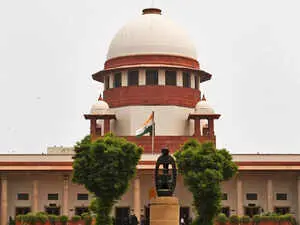
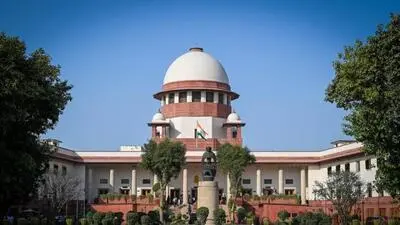
The Supreme Court on Friday questioned whether the right to work can be placed on a par with the fundamental right to life under Article 21. A bench of CJI Surya Kant and Justices Joymalya Bagchi and V Mohana was hearing a PIL on delayed wage compensation and minimum wages for rural workers under MGNREGA. The court noted the Constitution only treats right to work as a Directive Principle. "Should we create it on a par with Article 21?" Justice Bagchi asked, flagging the implications of making welfare schemes enforceable by mandamus.
Advocate Prashant Bhushan, for the petitioner, argued that the petition survives even after MGNREGA was replaced by the Viksit Bharat-Guarantee for Rozgar and Ajeevika Mission (Gramin) Act, 2025. He contended that paying below state-notified minimum wages amounts to forced labour. The CJI raised practical concerns about higher wages reducing the number of workers employed under the scheme. The court disposed of the 2015 PIL, saying the wage-delay issue is covered by the Swaraj Abhiyan judgment, and allowed the petitioner to file a fresh challenge to the new Act.
The Economic Times reports the court discussed the broader constitutional question of elevating the right to work. LiveLaw reports the CJI praised MGNREGA as a "wonderful job" and "not a freebie scheme," but said no fresh petition from aggrieved workers was before the court. The bench gave liberty to file a new petition challenging the VB-G RAM G Act's provisions.
Indian Opinion Analysis
Both outlets report the same core hearing but differ in emphasis. Economic Times leads with the constitutional question and the bench's skepticism, framing the story as a jurisprudential debate. LiveLaw leads with the CJI's praise for MGNREGA and the court granting liberty to file a fresh petition, giving a more scheme-friendly opening. The neutral read is that the court did not close the door on the issue but kicked it down the road: it disposed the old PIL as covered by precedent, while explicitly inviting a new challenge. The key next step is whether a fresh petition is filed, which the bench said it would examine. Watch for a new challenge to the VB-G RAM G Act's minimum wage provisions in coming months.
Coverage: 2 sources, 2 neutral
Sources (2): economictimes.indiatimes.com (neutral report), livelaw.in (neutral report)
This story was synthesised by AI from the 2 sources linked above. Methodology and corrections.
Updated: this story now draws on 2 sources.