
















Now Reading: Nagaland discoveries push back human habitation by 3,500 years
-
01
Nagaland discoveries push back human habitation by 3,500 years


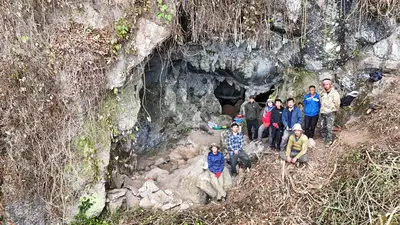
A March 2026 archaeological expedition in Nagaland's Noklak district has found evidence of human habitation dating back approximately 3,500 years, pushing back known settlement in the region by the same margin. The joint team from Nagaland University and the state's Department of Art & Culture discovered cord-marked pottery, ground stone tools, hearth features, carbonised cereal remains and animal remains at the Leilo Kaa rockshelter in Chiphur. Radiocarbon dating by Beta Analytic Laboratory in Florida using Accelerator Mass Spectrometry confirmed the age.
The find also includes charred remains of foxtail millet and Job's tears, suggesting early cultivation. Archaeologists caution against calling it proof of a full farming transition. The Naga Hills are part of a corridor linking South and Southeast Asia, and the evidence may reshape understanding of early migration and agriculture in the region. Local Khiamniungan Naga community members are being trained in fieldwork to aid future excavations.
Indian Opinion Analysis
Northeast India has long been a blind spot in South Asian archaeology, partly because the terrain makes surveys slow and partly because prehistoric research has focused on the Gangetic plains. This discovery puts Nagaland on the same timeline as early agricultural sites in the Brahmaputra valley, such as those in Assam's Daojali Hading. The real question is whether these Naga Hills communities developed millet cultivation independently or acquired it through contact with Southeast Asian groups. The next step will be comparing the Leilo Kaa pottery and crop remains with sites in Myanmar and Thailand. Watch for peer-reviewed publication of the AMS dates, which will let other scientists test the chronology.
Source: timesofindia.indiatimes.com
This story was synthesised by AI from the source linked above. Methodology and corrections.