












Now Reading: Narnaul’s Jal Mahal restored after a decade, water back in 16th-century reservoir
-
01
Narnaul’s Jal Mahal restored after a decade, water back in 16th-century reservoir

Narnaul’s Jal Mahal restored after a decade, water back in 16th-century reservoir

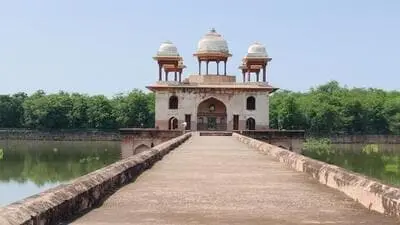
The 16th-century Jal Mahal in Narnaul, Haryana, has been refilled with water after nearly a decade, restoring a key feature of the 1591 monument. The revival was led by the Haryana government's Buildings and Roads and Irrigation departments, with work beginning in 2023-24 and ending last year at a cost of approximately Rs 70 lakh. Around 170 million litres of water from rainwater and an irrigation canal were used to fill the reservoir to a depth of five feet.
The monument, built by nawab Shah Quli Khan during Akbar's reign, is a protected Monument of National Importance under the Archaeological Survey of India, which will fund its future upkeep. Mahendragarh deputy commissioner Anupama Anjali said the revival positions Narnaul as a premier heritage hub, and the administration plans to introduce evening cultural events subject to approvals. Archaeologists and officials highlighted its role in traditional water management and the potential for a heritage circuit among Narnaul's 16 protected sites.
Indian Opinion Analysis
The restoration of Jal Mahal is part of a broader push to develop heritage tourism in southern Haryana, an area rich in medieval monuments but often overlooked. Narnaul's 16 protected structures, including stepwells and havelis, could form a circuit similar to Delhi's Mehrauli or Hampi. The Rs 70 lakh project is modest compared to typical heritage restoration costs, but the key challenge is sustained maintenance: without regular water supply and conservation discipline, the reservoir could dry up again. The ASI's commitment to fund upkeep will be tested in the coming monsoon season, which determines whether rainwater alone can keep the reservoir filled.
Source: hindustantimes.com
This story was synthesised by AI from the source linked above. Methodology and corrections.