











Now Reading: Fake e-challan APK costs Nashik businessman Rs 6 lakh
-
01
Fake e-challan APK costs Nashik businessman Rs 6 lakh


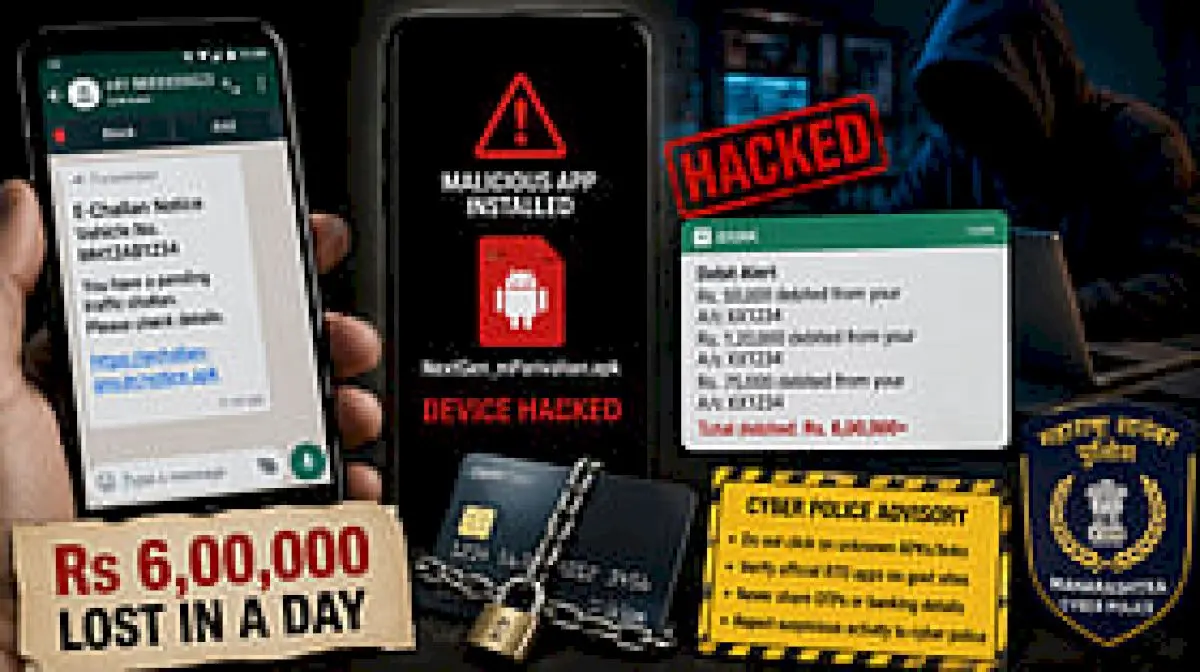
A 28-year-old powerloom businessman from Nashik lost over Rs 6 lakh after clicking a link in a fake e-challan message that downloaded a malicious APK file onto his phone. The fraud occurred…
The Story in Brief
A 28-year-old powerloom businessman from Nashik lost over Rs 6 lakh after clicking a link in a fake e-challan message that downloaded a malicious APK file onto his phone. The fraud occurred on July 31, and the money was debited in more than a dozen transactions in a single day, police said. After his phone was hacked, calls were forwarded to another number, and the fraudsters gained access to his bank card linked to the mobile number. He blocked his cards and filed a complaint; a case was registered under the Bharatiya Nyaya Sanhita and the IT Act.

Separately, Hyderabad cybercrime police recorded six APK fraud complaints in two days involving losses of over Rs 23 lakh. In one case, a 67-year-old retired employee lost Rs 6 lakh to a fake IndusInd Bank representative offering a pension card. The Times of India reports fraudsters are now baiting victims with banking apps, water bill, and RTO challan APKs. Police have cautioned against downloading unknown APK files from WhatsApp or SMS links.
The Indian Opinion
The repeated APK scams show a pattern: victims are curious or trusting, and fraudsters exploit that. The Nashik case is striking because the victim did not even own the vehicle in the message, yet curiosity won. Blaming victims is lazy; the real question is why telecom and banks cannot flag such obvious fraud faster. The test is whether the cyber police can trace the money trail in these six cases and recover even a fraction of the Rs 23 lakh. If they cannot, advisories will remain just words.
Sources (2): freepressjournal.in, timesofindia.indiatimes.com
This story was synthesised by AI from the 2 sources linked above.
Updated: this story now draws on 2 sources.