





















Now Reading: Nine plants that clean indoor air as Delhi AQI hits 244
-
01
Nine plants that clean indoor air as Delhi AQI hits 244


The Story in Brief
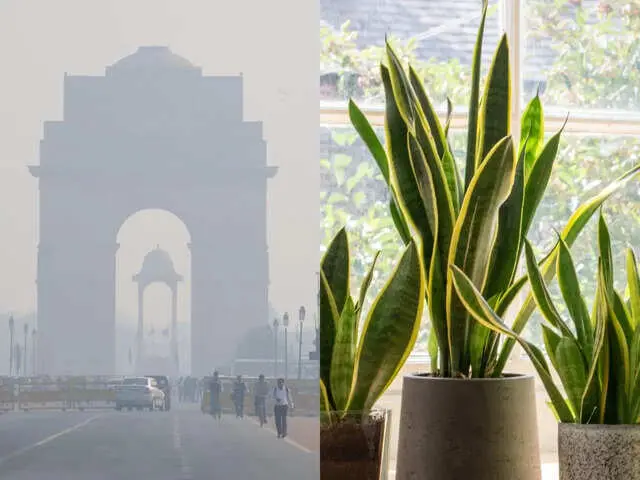
Delhi's Air Quality Index (AQI) shot up to 244 on Wednesday, 21 October, from 179 a day earlier, triggering the imposition of GRAP Stage 1 across Delhi-NCR. Monitoring stations at Jahangirpuri and Pusa have already recorded AQI levels above 300.
The article recommends nine houseplants, snake plant, areca palm, money plant, peace lily, spider plant, rubber plant, bamboo palm, aloe vera, and Indian tulsi, citing the 1989 NASA Clean Air Study and other research for their ability to absorb pollutants such as benzene, formaldehyde, and trichloroethylene.
The plants are described as low-maintenance and suited to Indian homes, with some like aloe vera and tulsi releasing oxygen at night.
Indian Opinion Analysis
The article offers a practical, lifestyle-oriented response to Delhi's deteriorating winter air, but it leaves the scale of the problem unaddressed. Nine houseplants, even if scientifically proven to absorb certain volatile organic compounds, cannot meaningfully reduce the PM2.5 and PM10 loads that drive AQI above 300. No plant can match the filtration capacity of a mechanical air purifier in a sealed room, let alone in a typical Delhi home with leaky windows and doors. The CAQM's GRAP Stage 1 restrictions are the actionable policy response, the plant list is a coping suggestion, not a solution.
Source: economictimes.indiatimes.com
This brief was synthesised by AI from the source linked above. Methodology and corrections.