















Now Reading: Oyster-covered dentures from 1898 show Chesapeake Bay’s 99% loss
-
01
Oyster-covered dentures from 1898 show Chesapeake Bay’s 99% loss

Oyster-covered dentures from 1898 show Chesapeake Bay’s 99% loss


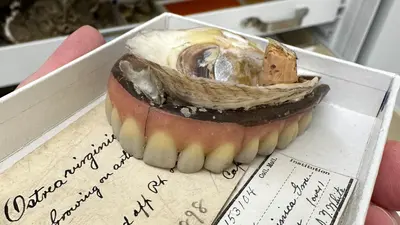
In 1898, a dredging boat in Chesapeake Bay pulled up a set of human dentures with a live oyster firmly attached. The specimen, now at the Smithsonian Institution, shows how abundant oysters…
The Story in Brief
In 1898, a dredging boat in Chesapeake Bay pulled up a set of human dentures with a live oyster firmly attached. The specimen, now at the Smithsonian Institution, shows how abundant oysters once were: they attached to almost any hard surface. Today, more than 99% of the bay's historic native oyster population has disappeared due to overharvesting, pollution, disease and habitat loss.
The loss has devastated the bay's natural water-filtering system. In the late 1800s, oysters could filter the entire Chesapeake Bay in days; today it takes nearly a year. Conservation groups and state agencies are rebuilding reefs using crushed stone and hatchery-raised oysters, but progress is slow.
The Indian Opinion
The story of an oyster growing on false teeth is a vivid reminder of ecological collapse, but it is easy to fall into one-sided narratives. Some might blame only modern industry, ignoring that Indigenous peoples harvested sustainably for millennia. Others might dismiss restoration as futile, yet artificial reefs have shown promise in rebuilding local populations. The real test will be whether large-scale restoration can restore filtering capacity to even a fraction of historic levels. Until then, the dentures remain a bizarre but sobering gauge.
Source: timesofindia.indiatimes.com
This story was synthesised by AI from the source linked above.
Updated: this story now draws on 1 sources.