














Now Reading: Pak, Saudi, Turkiye sign mutual defence pact in Mecca
-
01
Pak, Saudi, Turkiye sign mutual defence pact in Mecca


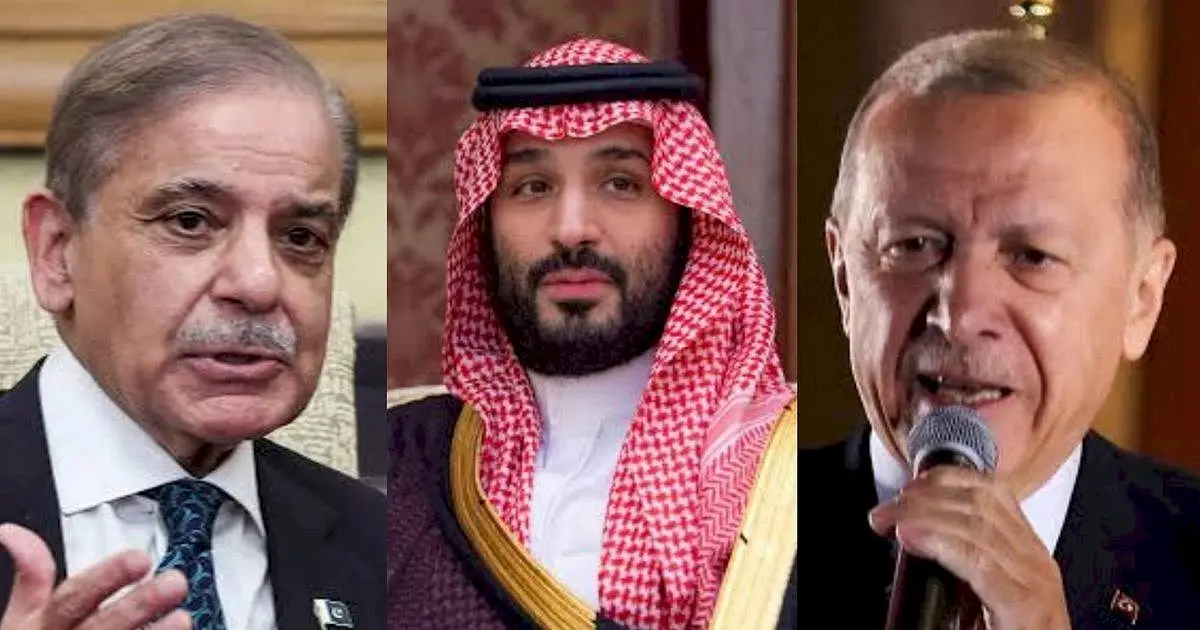
Pakistan, Saudi Arabia and Turkiye on Friday signed the Makkah Joint Defence Agreement, pledging that an armed attack on any one will be treated as an attack on all. Prime Minister Shehbaz…
The Story in Brief
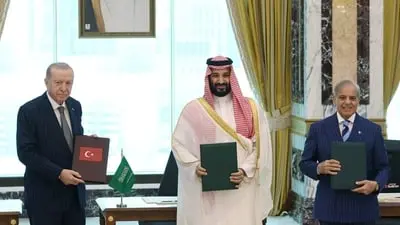
Pakistan, Saudi Arabia and Turkiye on Friday signed the Makkah Joint Defence Agreement, pledging that an armed attack on any one will be treated as an attack on all. Prime Minister Shehbaz Sharif, Crown Prince Mohammed bin Salman and President Recep Tayyip Erdogan signed the pact at the Al-Safa Palace in Mecca after the Makkah Al-Mukarramah Summit for Joint Defence.
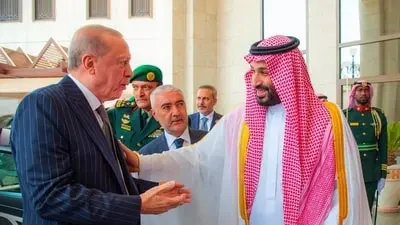
The pact aims to strengthen collective deterrence and enhance defence cooperation, the Pakistani foreign ministry said. It comes amid West Asia tensions, with Saudi ships hit by Houthis and threats to Red Sea shipping. India said it is closely following the development. Iran's MP Ebrahim Rezaei called it a "paper agreement" that will not bring security, Times Now reports.
The Indian Opinion
Talk of an "Islamic NATO" is exaggeration. This pact has no command structure, budget or integrated forces, and experts note it lacks the institutional depth of a real alliance. It is better read as a Saudi hedge against a US security umbrella that looks unreliable. For India, the risk is not the letter but the drift: a Sunni bloc that increasingly coordinates defence could complicate New Delhi's ties with Riyadh and Ankara. Watch whether the pact gains members such as Egypt or Jordan, and whether it translates into joint exercises. That will tell if it is more than a photo op in Mecca.
Sources (12): rediff.com, hindustantimes.com, hindustantimes.com (2), hindustantimes.com (3), timesofindia.indiatimes.com, thehindu.com, news.abplive.com, indiatvnews.com, timesnownews.com, timesnownews.com (2), hindustantimes.com (4), timesofindia.indiatimes.com (2)
This story was synthesised by AI from the 12 sources linked above.
Updated: this story now draws on 12 sources.