
















Now Reading: Patna HC quashes constable’s dismissal for assault without injury evidence
-
01
Patna HC quashes constable’s dismissal for assault without injury evidence

Patna HC quashes constable’s dismissal for assault without injury evidence


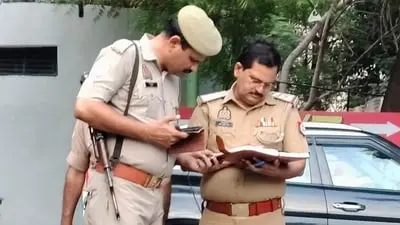
The Patna High Court has set aside the dismissal of a Bihar Police constable, Tilak Dhari Singh, who was accused of assaulting a colleague with a knife while intoxicated in July 2018. The court found the departmental proceedings lacked the alleged victim's testimony, an injury report, or any medical evidence to prove intoxication. Justice Dr. Anshuman ruled that even if a scuffle occurred, dismissal after 38 years of service was 'extremely disproportionate'.

The constable joined the Bihar Police in 1984 and had received several rewards. The disciplinary authority dismissed him in July 2021, and his appeal was rejected. The state argued the enquiry followed law and that departmental proceedings are independent of criminal trials, but the court noted no evidence was produced beyond the constable's admission of a scuffle.
The matter has been remanded to the competent Superintendent of Police to pass a fresh order within 90 days, considering the absence of key evidence. The court was not satisfied with the findings of the disciplinary or appellate authority, calling the punishment 'extremely excessive' without the victim's testimony or an injury report.
Indian Opinion Analysis
The Patna High Court's ruling applies Rule 14 of the Bihar Police Manual, which requires disciplinary proceedings to be based on legally admissible evidence. The absence of an injury report and medical proof of intoxication meant the department failed to meet the preponderance of probabilities standard, leaving the sole admitted fact, a scuffle, insufficient to justify dismissal. For a constable with 38 years of service, the court implicitly applied the principle of proportionality from Union of India v. G. Vasudevan Pillay (1998), where the Supreme Court held that pensionary benefits protect long-serving employees from disproportionate penalties. The Superintendent of Police must now reconsider the punishment within 90 days, potentially reducing it to a minor penalty like reduction in pay scale, which would restore the constable's pension eligibility.
Source: livelaw.in
This story was synthesised by AI from the source linked above. Methodology and corrections.