









Now Reading: Public health education needs Indian context, says report
-
01
Public health education needs Indian context, says report


The Story in Brief
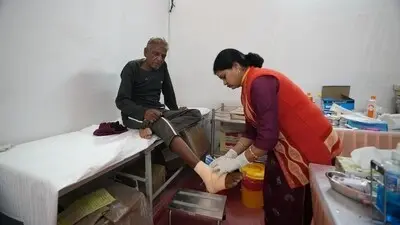
A group of academics has released a report calling for reforms in public health education in India, arguing that Master of Public Health (MPH) programmes are too rooted in Western models and miss real-world Indian contexts. The report highlights that while basic public health competencies are universal, local factors like community behaviours, health systems, and seasons, such as high fever meaning malaria or typhoid in different parts of India, must shape training.
India currently has about one public health specialist per 100,000 population in states with a public health cadre, far below the target of three per 100,000 and the US figure of 55 per 100,000. The country’s 125 MPH programmes produce about 5,000 postgraduates a year, compared to 17,000 in the US. The report also notes that regulation of MPH programmes falls between the National Medical Commission and the University Grants Commission, hurting quality.
The report recommends creating a specialised public health cadre in all states, expanding career opportunities for trained professionals, and aligning MPH programmes with the National Education Policy 2020 while preserving their professional nature. The group of academics plans to advocate for these corrective measures.
Indian Opinion Analysis
India’s public health workforce gap is stark: even the target of three specialists per 100,000 population is a fraction of what developed countries have, and most states lack a dedicated public health cadre. The absence of a single regulator for MPH programmes means quality varies widely across medical, social science, and agriculture universities. The report’s call for a broad-based public health service beyond clinical care echoes long-standing demands from global health bodies. The key next step is whether the government will act on creating a public health management cadre in all states and set a timeline for regulatory clarity.
Source: hindustantimes.com
This story was synthesised by AI from the source linked above. Methodology and corrections.