












Now Reading: Rajan’s 2005 Jackson Hole warning proved right by 2008 crisis
-
01
Rajan’s 2005 Jackson Hole warning proved right by 2008 crisis



The Jackson Hole Symposium, an annual gathering of global financial leaders in Wyoming, has often set the course for world economic policy. This year's edition, starting next weekend, will again draw attention from India, as decisions made there can impact trade and the rupee's fortunes. While it is unclear if any Indian official will attend, the event has a notable history with an Indian economist.

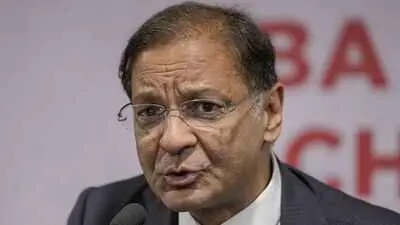
In 2005, Raghuram Rajan, then IMF chief economist and later RBI governor, presented a paper at Jackson Hole warning that the booming global financial system was encouraging excessive risk-taking by bankers, which could lead to a systemic collapse. His caution was dismissed by the elite audience, including US Treasury secretary Larry Summers, and seen as a challenge to then-Fed chairman Alan Greenspan's legacy of free-market deregulation.
Just three years later, the 2008 global financial crisis vindicated Rajan's warnings, as the US housing market crash and the fall of Lehman Brothers triggered a worldwide recession. Rajan later became RBI governor from 2013 to 2016. As this year's symposium approaches amid trade wars and geopolitical conflicts, the world will again watch for signals from the mountain lodge.
Indian Opinion Analysis
Rajan's 2005 paper was a rare instance of a senior economist publicly challenging Greenspan's orthodoxy from within the establishment. The dismissal he faced reflected how deeply embedded the belief in self-correcting markets was at that time. For India, the episode matters beyond pride: it showed that the global financial system's stability directly affects Indian capital flows, the rupee, and export demand. Today, with the US Federal Reserve cutting rates and global trade fracturing, Jackson Hole's consensus on tariffs and monetary policy will again ripple into India's current account and inflation management. The key number to watch from this year's event is any shift in the Fed's stance on further rate cuts.
Source: theweek.in
This story was synthesised by AI from the source linked above. Methodology and corrections.