












Now Reading: Reading in the ICU: Sorrow, Bliss, and a Hospital Wait
-
01
Reading in the ICU: Sorrow, Bliss, and a Hospital Wait


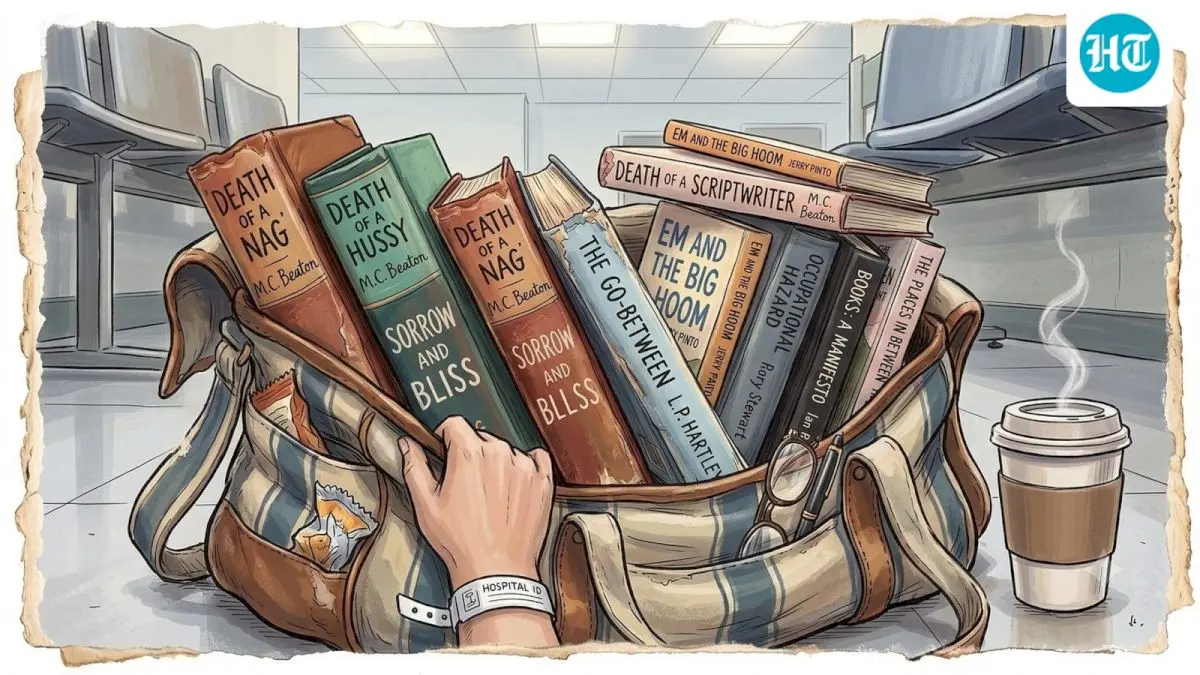
A reader describes carrying books into an intensive care unit waiting room, unable to read but turning to books in memory. The bag holds M.C. Beaton’s Hamish Macbeth mysteries, Rory Stewart’s Occupational…
The Story in Brief
A reader describes carrying books into an intensive care unit waiting room, unable to read but turning to books in memory. The bag holds M.C. Beaton’s Hamish Macbeth mysteries, Rory Stewart’s Occupational Hazard, and Ian Patterson’s Books: A Manifesto. In the reader’s mind, Meg Mason’s Sorrow and Bliss, about a woman named Martha grappling with an unnamed mental condition, blends with Jerry Pinto’s Em and the Big Hoom.
Later, in a regular hospital room, the reader opens a Kindle. From the first line of L.P. Hartley’s The Go-Between, "The past is a foreign country; they do things differently there", the reader is absorbed into a schoolboy’s world of summer and spells, escaping the vigil. The piece concludes with a plan to go home to a houseful of books.
The Indian Opinion
This column risks being dismissed as a mere book list, but it is more: a quiet protest against the myth that reading always offers escape. Here, books fail as distraction yet succeed as companions during trauma. The claim that literature always soothes is lazy; in the ICU waiting room, it is simply present. The real test is whether the reader will finish The Go-Between once home, or if the hospital stay has changed what they can bear to read.
Source: hindustantimes.com
This story was synthesised by AI from the source linked above.