












Now Reading: Rijiju: Welfare schemes for hill minorities implemented nationwide
-
01
Rijiju: Welfare schemes for hill minorities implemented nationwide


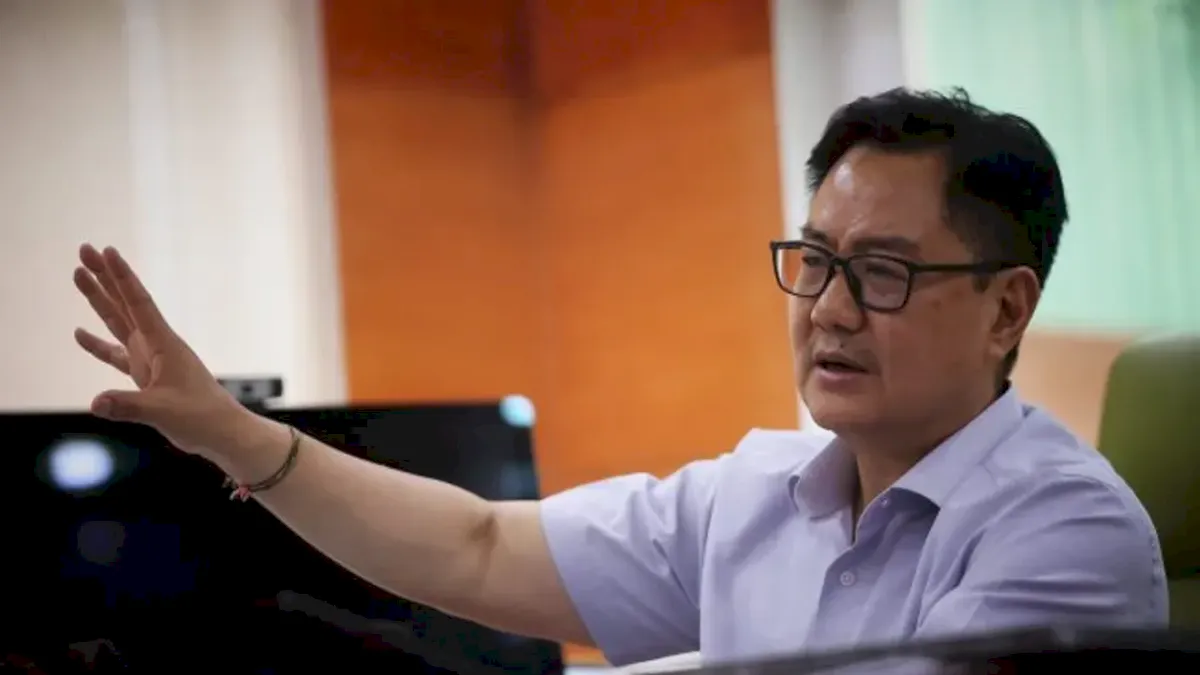
Union Minister for Minority Affairs Kiren Rijiju informed Rajya Sabha that welfare schemes for the six centrally notified minority communities, Buddhists, Christians, Jains, Muslims, Parsis and Sikhs, are being implemented across the…
The Story in Brief
Union Minister for Minority Affairs Kiren Rijiju informed Rajya Sabha that welfare schemes for the six centrally notified minority communities, Buddhists, Christians, Jains, Muslims, Parsis and Sikhs, are being implemented across the country, including hill-based communities in West Bengal. The schemes include the integrated Pradhan Mantri Virasat Ka Samvardhan (PM VIKAS) for skilling, education and entrepreneurship, the Pradhan Mantri Jan Vikas Karyakram (PMJVK) for community infrastructure in minority concentration areas, and concessional credit through the National Minorities Development & Finance Corporation (NMDFC). Under NMDFC, persons with annual family income up to Rs 3 lakh (CL-1) and Rs 8 lakh (CL-2) are eligible. In West Bengal, the West Bengal Minorities Development & Finance Corporation implements these schemes.
Rijiju's reply, in response to a question, stressed that the schemes apply to all topographies and are not confined to any particular region.
The Indian Opinion
The minister's assertion that schemes cover all topographies is formally correct, but implementation in remote hill areas often falters due to weak state machinery. Critics sometimes allege deliberate neglect, while the government counters with scheme universality. The real test is not the policy text but the actual disbursement data: how many hill-based minority families have received NMDFC loans or PM VIKAS training in the last year? The next annual report from the ministry will settle the argument.
Source: greaterkashmir.com
This story was synthesised by AI from the source linked above.