






Now Reading: India confirms peace talks with Russia, Ukraine since July 2026
-
01
India confirms peace talks with Russia, Ukraine since July 2026


The Story in Brief
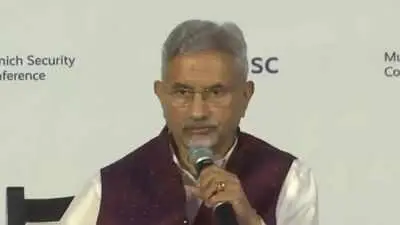
External Affairs Minister S Jaishankar said on 5 October 2026 that India began direct conversations with Russia and Ukraine in July 2026 after attacks on civilian shipping in the Black Sea killed Indian sailors. Speaking at the 5th Kautilya Economic Conclave, Jaishankar said India protested strongly to both sides and then moved beyond advocacy to secure maritime shipping and discuss grain, energy and non-attack guarantees. He described the global order as an 'age of flux' and said India is working to secure grain and fertiliser shipments for the Global South.
Jaishankar's comments followed Prime Minister Narendra Modi's statement on 5 October that India has 'consistently supported every meaningful effort towards peace', after meeting Swiss President Guy Parmelin. Ukraine Foreign Minister Andrii Sybiha has called India's ceasefire proposal the 'broadest' among four received from India, the US, Egypt and Turkiye. Russian President Vladimir Putin has said Modi has 'good ideas' for a solution. Jaishankar said the talks are ongoing and India cannot say with confidence an outcome will come, but the effort is worth making.
Update, 6 October 2026: Sources from 5 and 6 October 2026 add that Jaishankar confirmed on 5 October that India's talks with Russia and Ukraine began in July 2026 after attacks on civilian shipping killed Indian sailors. He described the global order as an 'age of flux' and said India is working to secure grain and fertiliser shipments for the Global South. PM Modi also said on 5 October that India has consistently supported every meaningful effort towards peace.
Indian Opinion Analysis
Most outlets reported Jaishankar's confirmation that India moved beyond advocacy after July attacks killed Indian sailors, with the Indian Express and Times of India leading on that trigger. News On Air and Rediff emphasised India's confidence in rising to challenges and its role for the Global South. The print-run PTI wire copy across ThePrint, Business Standard and The Federal was uniform straight reporting, while the Kautilya Conclave sources added the 'age of flux' framing. No outlet questioned the diplomatic shift, coverage was uniformly neutral-report. The key new detail is the July 2026 start date, which explains the timeline for India's proactive engagement.
Coverage: 32 sources, 1 pro-government, 31 neutral
Sources (32): indiatoday.in (neutral report), timesofindia.indiatimes.com (neutral report), businesstoday.in (neutral report), rediff.com (neutral report), timesofindia.indiatimes.com (2) (neutral report), ndtv.com (neutral report), business-standard.com (neutral report), timesofindia.indiatimes.com (3) (neutral report), abplive.com (neutral report), thefederal.com (neutral report), deccanchronicle.com (neutral report), timesnownews.com (neutral report), theprint.in (neutral report), theprint.in (2) (neutral report), newsonair.gov.in (pro government), newindianexpress.com (neutral report), theprint.in (3) (neutral report), timesofindia.indiatimes.com (4) (neutral report), economictimes.indiatimes.com (neutral report), thehindubusinessline.com (neutral report), scmp.com (neutral report), firstpost.com (neutral report), indianewsnetwork.com (neutral report), news.google.com (neutral report), economictimes.indiatimes.com (2) (neutral report), economictimes.indiatimes.com (3) (neutral report), business-standard.com (2) (neutral report), indianexpress.com (neutral report), rediff.com (2) (neutral report), timesofindia.indiatimes.com (5) (neutral report), indianexpress.com (2) (neutral report), indianexpress.com (3) (neutral report)
This brief was synthesised by AI from the 32 sources linked above, so one read covers every framing they carry. Methodology and corrections.