











Now Reading: SC asks CJI to consider permanent 5-judge constitution bench
-
01
SC asks CJI to consider permanent 5-judge constitution bench


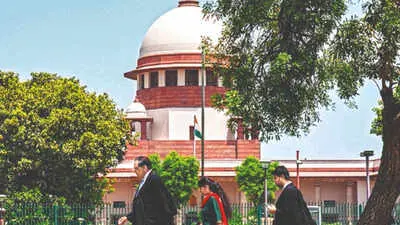
A two-judge Supreme Court bench has requested the Chief Justice of India to explore setting up a permanent five-judge constitution bench to decide constitutional questions. The bench, comprising Justices Dipankar Datta and…
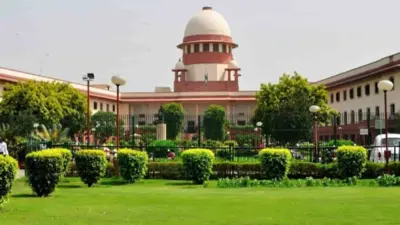
A two-judge Supreme Court bench has requested the Chief Justice of India to explore setting up a permanent five-judge constitution bench to decide constitutional questions. The bench, comprising Justices Dipankar Datta and Satish Chandra Sharma, called the inordinate delay in resolving references to larger benches a 'source of institutional embarrassment.'
The bench noted that 22 five-judge matters with 175 tagged cases are pending, and that references have remained unresolved for five to 20 years. It said self-introspection is required and urged 'urgent' action. The request comes while the judges differed on whether to refer pleas challenging the 2023 law that excludes the CJI from the panel to select the Chief Election Commissioner and Election Commissioners. Justice Datta questioned whether the law ensures an independent process, while Justice Sharma held the matter needed a constitutional bench. Both agreed to place the matter before the CJI for a bench decision.
Indian Opinion Analysis
All three outlets report the same core event, but their framing choices differ. The Times of India leads with the practical benefits of a permanent constitutional bench, foregrounding predictability and speed, which aligns with an institutional-improvement lens. Times Now leads with the court's own language of 'institutional embarrassment,' centering the criticism and the angst over delay. LiveLaw reports the split opinion between the two judges in detail, including Justice Datta's cricket analogy and his questioning of the 2023 law, which foregrounds the substantive constitutional challenge over the procedural request. The underlying story carries two dimensions: a long-running backlog problem and a live separation-of-powers dispute. Coverage that leads with the embarrassment draws attention to judicial self-criticism, coverage that leads with the referral deepens the legal stake in election commission independence. Readers benefit from noting both. The CJI decides the bench size.
Coverage: 3 sources, 3 neutral
Sources (3): timesofindia.indiatimes.com (neutral report), timesnownews.com (neutral report), livelaw.in (neutral report)
This brief was synthesised by AI from the 3 sources linked above, so one read covers every framing they carry.