














Now Reading: Supreme Court reconstitutes bench to hear PMLA review pleas
-
01
Supreme Court reconstitutes bench to hear PMLA review pleas


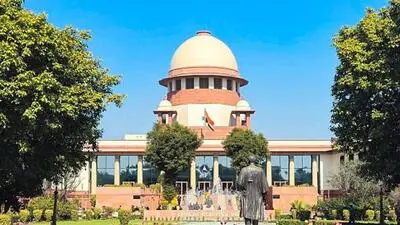
The Supreme Court has reconstituted a three-judge bench to hear review petitions challenging its July 2022 verdict in the Vijay Madanlal Choudhary case, which upheld key powers of the Enforcement Directorate under the Prevention of Money Laundering Act. The new bench comprises Chief Justice Surya Kant and justices Joymalya Bagchi and V Mohana. The earlier bench included justices Ujjal Bhuyan and N Kotiswar Singh, but the CJI noted that listing the matter before the original bench would require breaking three other benches.
Both the ED and the petitioners consented to the new composition. The review petitions, including one by Congress MP Karti Chidambaram, argue that the 2022 judgment diluted constitutional safeguards. They seek reconsideration of provisions on arrest, search and seizure, reverse burden of proof, non-supply of ECIR, and bail conditions. The ED has opposed the petitions, saying they fail to show any error apparent on the record.
The court is expected to first decide whether the review petitions are maintainable. In a separate ruling, the Delhi High Court held that civil writ petitions can be entertained to challenge an ECIR and subsequent ED actions under PMLA, quashing proceedings in a case where the predicate offence was closed.
Indian Opinion Analysis
Hindustan Times frames the story around the Supreme Court's administrative decision to reconstitute the bench, giving equal weight to the ED's procedural objections and the petitioners' arguments. Livemint's separate coverage focuses on the Delhi High Court judgment, which asserts writ jurisdiction over ECIR challenges and quashes ED proceedings after a predicate offence was closed. Taken together, the coverage shows two parallel developments: the Supreme Court's procedural step does not indicate any view on merits, while the High Court's ruling provides a concrete check on ED's power to continue proceedings after a predicate offence collapses. A careful reader should note that the Supreme Court has not yet ruled on maintainability, and the Delhi High Court judgment, though significant, is one ruling and may be appealed. Watch for the Supreme Court's decision on maintainability.
Coverage: 2 sources, 2 neutral
Sources (2): hindustantimes.com (neutral report), livelaw.in (neutral report)
This story was synthesised by AI from the 2 sources linked above. Methodology and corrections.
Updated: this story now draws on 2 sources.