











Now Reading: SC split verdict on poll panel appointment law, CJI to decide
-
01
SC split verdict on poll panel appointment law, CJI to decide


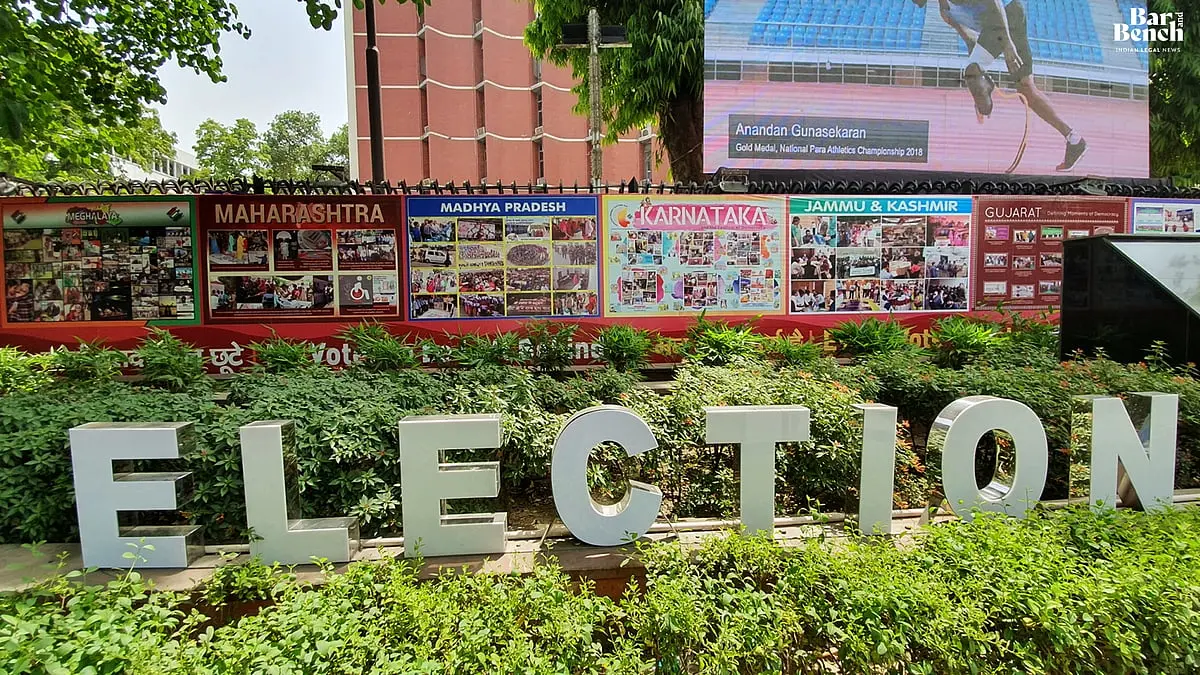
The Supreme Court on Wednesday delivered a split verdict on whether petitions challenging the 2023 law on appointing Election Commissioners should be referred to a Constitution Bench. Justice Dipankar Datta rejected the…
The Supreme Court on Wednesday delivered a split verdict on whether petitions challenging the 2023 law on appointing Election Commissioners should be referred to a Constitution Bench. Justice Dipankar Datta rejected the reference, holding that the Supreme Court's 2023 judgment in Anoop Baranwal v. Union of India had already settled the principle that the Election Commission must be insulated from exclusive executive control. Justice Satish Chandra Sharma disagreed, saying the question of excluding a neutral selector from the panel raised a substantial constitutional issue not settled by any earlier judgment. The two-judge bench directed that the papers be placed before Chief Justice Surya Kant to consider constituting a Constitution Bench.
In his separate opinion, Justice Datta said the Leader of Opposition's role in the selection panel, which includes the Prime Minister and a Union Cabinet Minister nominated by him, is "ornamental" because the minister cannot defy the Prime Minister due to the doctrine of collective responsibility. He also rejected the government's argument that the Collegium system gives judges control over judicial appointments, calling the phrase "judges appoint judges" a myth and criticising the government for selectively clearing Collegium proposals. The bench also urged the CJI to consider appointing a permanent five-judge bench to decide constitutional cases, noting that references to larger benches remain pending for years.
Indian Opinion Analysis
Barandbench.com and NDTV emphasised Justice Datta's critique of executive dominance in appointments, including his remark that the Collegium system is a myth selectively used by the government. Assam Tribune gave equal weight to both judges' positions, neutrally reporting the split. All sources agree the matter now awaits the CJI's decision on a Constitution Bench, a process that itself risks delay. The core legal question whether a parliamentary law can override the basic structure principle of an independent election watchdog will only be settled if a larger bench hears it, and the timeline for that remains uncertain.
Coverage: 5 sources, 2 government-critical, 3 neutral
Sources (5): barandbench.com (government critical), barandbench.com (2) (government critical), barandbench.com (3) (neutral report), assamtribune.com (neutral report), ndtv.com (neutral report)
This brief was synthesised by AI from the 5 sources linked above, so one read covers every framing they carry.
Updated: this story now draws on 5 sources.