











Now Reading: Supreme Court orders all states to set up SITs for fake motor insurance claims
-
01
Supreme Court orders all states to set up SITs for fake motor insurance claims

Supreme Court orders all states to set up SITs for fake motor insurance claims


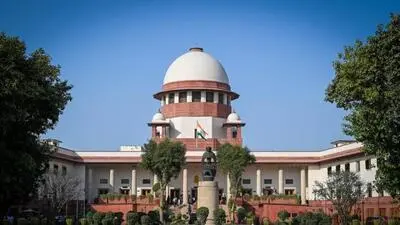
The Supreme Court has directed every state to form a dedicated Special Investigation Team (SIT) to probe suspected fraudulent motor accident insurance claims. The August 17 order by a bench of Justices Ahsanuddin Amanullah and Prasanna B. Varale came after a routine case involving a disputed vehicle revealed what the court called a fraud of enormous proportion, where the same vehicle was shown as involved in multiple accidents. Insurance companies must forward rejected claims to the SIT and conduct internal probes for officer collusion.

Over 56 percent of India's 30.48 crore vehicles lack valid insurance, the court noted. The bench also heard a suggestion for a common portal integrated with VAHAN and SARATHI to let insurers cross-check repeated claims. The court asked states to disclose their investigation procedures and provide adequate manpower to the SITs.
Indian Opinion Analysis
Livemint framed the judgment as a systemic crisis, opening with a 56% uninsured-vehicle statistic and stressing enforcement and consumer confusion. Livelaw focused on the court's specific order: SIT constitution, fraud investigation, and the common-portal suggestion. Livemint's deep-dive on compliance gaps and global comparisons risks understating the judicial process that produced these outcomes. The balanced reading: the Supreme Court addressed both a procedural fraud and a systemic compliance failure in one ruling. The Ministry of Road Transport's next compliance report will test how many states actually set up the SITs before the next Court hearing.
Coverage: 2 sources, 2 neutral
Sources (2): livelaw.in (neutral report), livemint.com (neutral report)
This brief was synthesised by AI from the 2 sources linked above, so one read covers every framing they carry. Methodology and corrections.
Updated: this story now draws on 2 sources.