










Now Reading: Supreme Court orders Centre to form pharma marketing code panel
-
01
Supreme Court orders Centre to form pharma marketing code panel


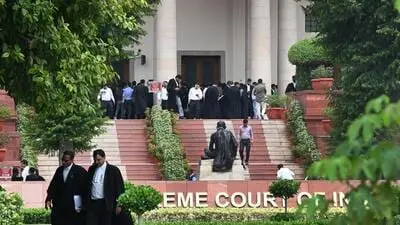
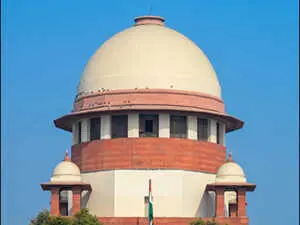
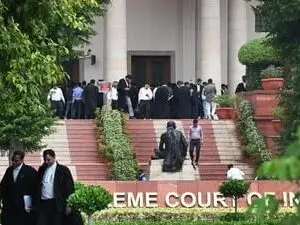
The Supreme Court on Thursday, 8 October 2026, directed the Union of India to constitute a committee to review representations on unethical drug promotion practices and the mandatory implementation of a marketing code for pharmaceutical companies. The bench of Justices Vikram Nath and Sandeep Mehta ordered the committee to consider suggestions and representations, then give recommendations to the government.
The order came on a public interest litigation by the Federation of Medical and Sales Representatives Associations of India and others, which sought strict regulation of marketing and promotion of drugs. The petition argued that pharmaceutical companies use gifts, trips and high-pressure tactics to influence doctors, leading to over-prescription and infringement of the right to health. The Centre's counter affidavit cited the Uniform Code for Pharmaceutical Marketing Practices (UCPMP), 2024, and noted it was considering recommendations to make the code mandatory by statute.
The court posted the matter for 29 January 2027 for consideration of the compliance affidavit by the Union of India.
Indian Opinion Analysis
Verdictum.in and Hindustan Times both report the same order with neutral, court-record framing, though Hindustan Times adds context on the government's earlier attempt to use the Essential Commodities Act and Drugs and Cosmetics Act. Verdictum.in, in its legal report, leads with the bench's direction and includes the petition's detailed allegations, including the CBDT's claim of Rs 1,000-crore freebies by the Dolo-650 maker. Hindustan Times, in its two separate reports, emphasises the significance of the direction, the Centre's prior acknowledgement of regulatory gaps, and the composition of a previous committee headed by Dr VK Paul in 2022. The coverage is essentially uniform straight reporting, the main difference is depth. Both agree the committee must now produce concrete recommendations, with the 29 January 2027 compliance date as the clear next step.
All three stories are neutral straight news reports, differing only in detail and structure.
Coverage: 3 sources, 3 neutral
Sources (3): verdictum.in (neutral report), hindustantimes.com (neutral report), hindustantimes.com (2) (neutral report)
This brief was synthesised by AI from the 3 sources linked above, so one read covers every framing they carry. Methodology and corrections.