




















Now Reading: Supreme Court Rejects Motor Accident Multiplier for Electrocution Claims
-
01
Supreme Court Rejects Motor Accident Multiplier for Electrocution Claims

Supreme Court Rejects Motor Accident Multiplier for Electrocution Claims

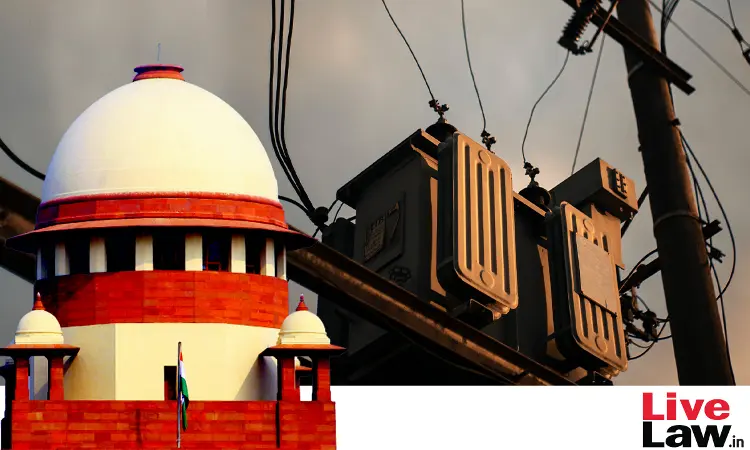
The Supreme Court has ruled that the multiplier method used to calculate compensation in motor accident cases cannot be applied to deaths caused by electrocution. A bench of Justices Sanjay Karol and Nongmeikapam Kotiswar Singh set aside a Karnataka High Court decision that had used the method under the Motor Vehicles Act, 1988.
The case involved a man who died after contacting an 11 KV transmission line and another person who suffered severe injuries after touching a 66 KV line while retrieving a cricket ball. The Court said the Electricity Act, 2003 imposes liability on licensees in specified circumstances but does not prescribe a compensation formula. Referring to its 2014 decision in Raman v Uttar Haryana Bijli Vitran Nigam Ltd, it held that compensation in such cases cannot be calculated using the motor accident framework.
Indian Opinion Analysis
The ruling limits the automatic transfer of compensation formulas from one statutory regime to another. In future electrocution claims, courts will have to assess the applicable legal duty, evidence on how the incident occurred and the claimant’s actual loss rather than rely on a fixed calculation borrowed from motor accident law. The outcome may also depend on whether disputed facts can be decided in writ proceedings or require a fuller evidentiary process. The next signal will be how lower courts quantify compensation after the High Court’s method has been rejected.
Source: livelaw.in
This story was synthesised by AI from the source linked above. Methodology and corrections.