





Now Reading: Supreme Court seeks Centre reply on cousin marriage awareness
-
01
Supreme Court seeks Centre reply on cousin marriage awareness


The Story in Brief
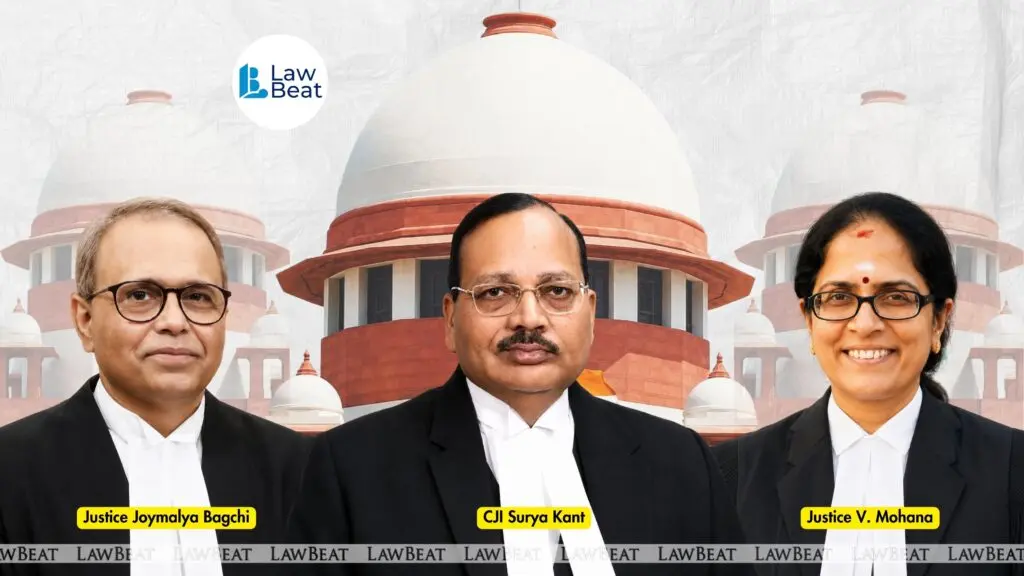
The Supreme Court on Friday, 20 November 2026, issued limited notice to the Union government on a PIL highlighting medical risks of consanguineous marriages. The bench of Chief Justice Surya Kant, Justice Joymalya Bagchi and Justice V Mohana said the notice was confined to urging the Centre to consider suitable legislation or wide publicity, including through school and college curricula, to promote scientific temper on the issue.

The petition was filed by Charvi S, a 20-year-old law student with 40% visual impairment, who is the child of a first-cousin marriage in the Reddy community. She was diagnosed with cone dystrophy. The PIL challenges customary exceptions under the Hindu Marriage Act and Special Marriage Act that permit marriages within prohibited degrees, arguing they violate Articles 14 and 21. The petitioner clarified she does not seek to criminalise existing marriages.
Senior advocate Kaadambari Singh submitted the practice is common in rural areas with low awareness. The court observed marriage is a matter of personal choice but agreed individuals should be able to take an informed decision. The petition cited NFHS-5 data showing consanguineous unions account for about 11% nationally and 23 to 28% in parts of southern India.
Indian Opinion Analysis
Livelaw.in led with the petitioner’s personal story and her visual impairment, framing the PIL as a constitutional challenge to statutory exceptions under Articles 14, 21 and 47. Deccan Herald added the NFHS-5 prevalence data and medical studies quantifying genetic risk, providing a more data-driven context. Both reports covered the court’s limited notice and the petitioner’s clarification against criminalising existing marriages uniformly. The balanced reading is that the court has opened the door for awareness measures without endorsing a ban, leaving the Centre to respond on the scope of public education and potential legislative review.
The next step is the Centre’s response, which the court will consider at a future hearing.
Coverage: 2 sources, 2 neutral
Sources (2): livelaw.in (neutral report), deccanherald.com (neutral report)
This brief was synthesised by AI from the 2 sources linked above, so one read covers every framing they carry. Methodology and corrections.