













Now Reading: Supreme Court: Written arrest grounds are non-negotiable right
-
01
Supreme Court: Written arrest grounds are non-negotiable right



The Supreme Court has ruled that an arrested person has a fundamental right to be given the grounds of arrest in writing, in a language they understand, under Article 22(1) of the…
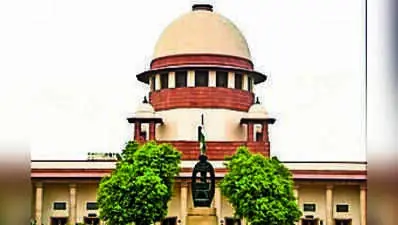
The Supreme Court has ruled that an arrested person has a fundamental right to be given the grounds of arrest in writing, in a language they understand, under Article 22(1) of the Constitution. Deccan Herald reports the Court called this a "non-negotiable" right applying to all offences, including those under the Bharatiya Nyaya Sanhita and special laws, and that failing to provide written grounds entitles the person to immediate release.

LiveLaw adds that the Court rejected arguments that a violation could be treated as a mere procedural lapse requiring proof of prejudice. It held that unconstitutional arrest vitiates both the arrest and subsequent remand, and a later chargesheet cannot validate it. The Court also distinguished such a release from bail, saying the detention was illegal from the start.
Deccan Herald notes the Court prescribed strict procedures for rearrest, including requiring police to apply before the magistrate who ordered release and to face disciplinary action for violations. The ruling aims to curb police overreach where rearrest is used to harass individuals released by courts.
Indian Opinion Analysis
Deccan Herald foregrounds police misuse, rearrests as harassment, and frames the ruling as a check on State power. LiveLaw sticks to the Court's legal reasoning without editorial colour. Both accurately report the same judgment, but the editorial emphasis differs: one warns of systemic abuse, the other of procedural clarity. The practical impact will depend on how strictly lower courts enforce the new guidelines against errant police officers, a test that begins with the next bail hearing.
Coverage: 2 sources, 1 government-critical, 1 neutral
Sources (2): deccanherald.com (government critical), livelaw.in (neutral report)
This brief was synthesised by AI from the 2 sources linked above, so one read covers every framing they carry.