



















Now Reading: Ten years on, cash still dominates India despite demonetisation goals
-
01
Ten years on, cash still dominates India despite demonetisation goals


The Story in Brief
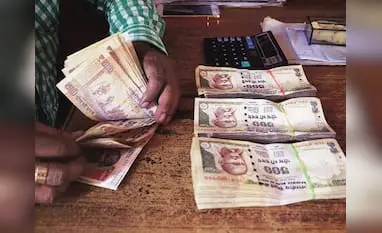
Ten years after Prime Minister Narendra Modi withdrew Rs 500 and Rs 1,000 notes on 8 November 2016, cash remains dominant in the Indian economy and the stated objectives of demonetisation, eliminating black money, curbing counterfeit notes and reducing cash dependence, remain largely unfulfilled, according to reports by The News Minute and Business Standard. The move invalidated 86 per cent of the currency in circulation by value.
Data from the Reserve Bank of India’s 2017-18 annual report showed that 99.3 per cent of the withdrawn notes, worth Rs 15.31 lakh crore of Rs 15.42 lakh crore, returned to the banking system. The News Minute cited economist CP Chandrasekhar, who said this contradicted the expectation that unaccounted cash would remain outside the system. Business Standard noted that cash circulation as a share of GDP remains near pre-demonetisation levels. Both outlets highlighted that digital payments, especially UPI, grew rapidly, but cash still dominates.
Economist Jayati Ghosh, quoted by The News Minute, argued that black wealth is often held through formal channels and assets rather than cash. Former Andhra Pradesh minister Parakala Prabhakar said it is held in gold, land and buildings. Chandrasekhar argued that tackling black money requires sustained investigation and enforcement, not a sudden move. Business Standard cited the 2016-17 Economic Survey, which called demonetisation 'a radical step with short-term costs and long-term benefits', but said evidence of limited gains has mounted over the decade.
Indian Opinion Analysis
The News Minute and Business Standard both present demonetisation as falling short of its original goals, but with different framing emphasis. The News Minute leads with unfulfilled objectives and prominently quotes economists and a former minister who argue that black wealth was never in cash form, undercutting the government's rationale. Business Standard, while agreeing on limited gains, structures its piece around the Economic Survey's early optimism and the subsequent accumulation of evidence, offering a more measured tone. Neither outlet adopts a pro-government stance, both are critical in substance, but Business Standard's neutral-report history on this story is consistent with its analytical distance. The key open question remains whether any enforcement or policy follow-up can address black money, which neither story reports as underway.
Coverage: 2 sources, 1 government-critical, 1 neutral
Sources (2): thenewsminute.com (government critical), business-standard.com (neutral report)
This brief was synthesised by AI from the 2 sources linked above, so one read covers every framing they carry. Methodology and corrections.
Update, 8 November 2026: this story now draws on 2 sources.