













Now Reading: TRAI launches Network Anubhav platform for network speed checks
-
01
TRAI launches Network Anubhav platform for network speed checks


The Story in Brief
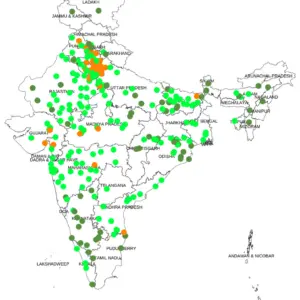
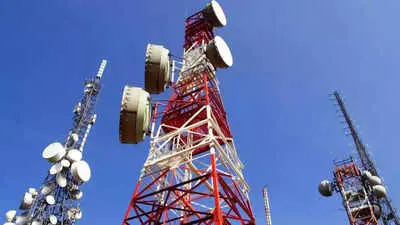
The Telecom Regulatory Authority of India (TRAI) on Wednesday, 4 November 2026 launched the Network Anubhav Platform, a geospatial dashboard that lets consumers compare mobile and fixed broadband speeds by location and service provider. The platform draws on user tests from TRAI's MySpeed and MyCall apps and the regulator's independent drive test results. Consumers can view download and upload speeds on interactive maps, use percentile values (P50, P80 for mobile, P90 for fixed broadband), and access a Do Not Disturb (DND) web interface.
Telecom service providers get a secure interface to see call quality, coverage, and internet test data with location and time, which they can use to identify problem areas. TRAI said user-generated results do not represent a comprehensive network quality assessment but provide useful information on other users' experience at specific locations. TRAI chairman Anil Kumar Lahoti called the platform a step toward transparency and consumer empowerment, and urged wider participation through the MySpeed and MyCall apps to improve data coverage.
Indian Opinion Analysis
All four outlets covered the launch with identical straight reporting, quoting TRAI chairman Anil Kumar Lahoti and describing the platform's geospatial maps, DND web interface, and consumer test data without any critical framing. The only difference is in the level of operational detail: The Times of India led with consumer compare ability, The Hindu Business Line and CNBC-TV18 foregrounded the DND web access, and Economic Times added the most technical specifics, such as the integrated value from the last five tests. Since none of the sources carried a government-critical, sensationalist, or partisan slant, the uniform coverage reflects a wire-service-style factual announcement. TRAI's own qualification that user tests do not constitute a comprehensive assessment is repeated in every version, and no outlet questioned it. The next concrete step is Lahoti's call for wider consumer participation to improve the platform's data coverage.
Coverage: 4 sources, 4 neutral
Sources (4): timesofindia.indiatimes.com (neutral report), cnbctv18.com (neutral report), thehindubusinessline.com (neutral report), economictimes.indiatimes.com (neutral report)
This brief was synthesised by AI from the 4 sources linked above, so one read covers every framing they carry. Methodology and corrections.
Update, 4 November 2026: this story now draws on 4 sources.