

















Now Reading: Two schools bring life back to Ladakh’s ghost villages
-
01
Two schools bring life back to Ladakh’s ghost villages


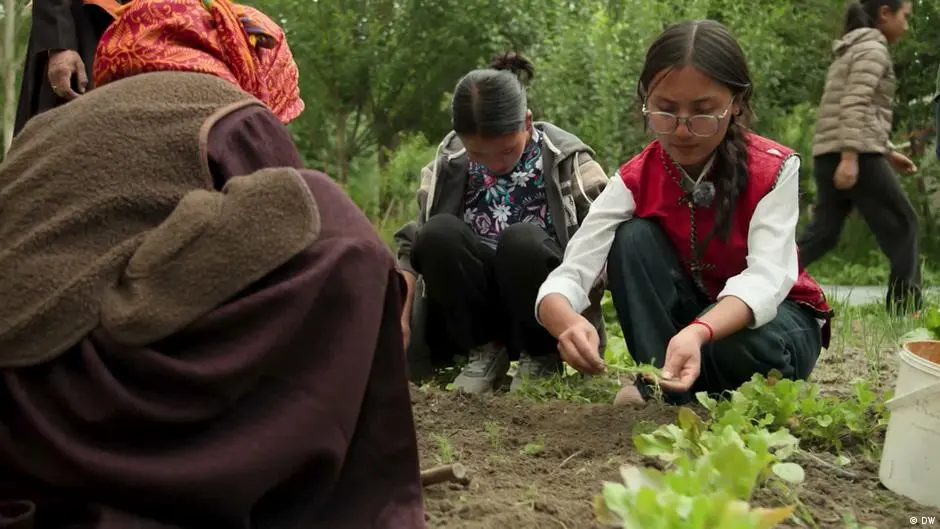
Ladakh's remote villages are emptying as glaciers shrink and water shortages make farming impossible. Abandoned homes and empty fields now dot the landscape of this high-altitude region, where climate change has disrupted traditional livelihoods and forced families to move to towns in search of work and education.
Two educational initiatives are trying to reverse the trend. A community-run school in one depopulated village now enrols children from nearby areas, and a residential school built with private funding offers free education to local students. The projects aim to give families a reason to stay or return by providing quality schooling close to home.
Residents and organisers say the schools have already slowed the exodus in a few villages. The long-term test is whether the model can be replicated in other parts of Ladakh, where dozens of settlements have been classified as ghost villages by local authorities.
Indian Opinion Analysis
Ladakh's depopulation mirrors a pattern seen across the Himalayan region, where climate-driven water stress and limited public services push people toward urban centres. The Union Territory government listed over 80 villages as fully or partially abandoned in its 2023 census of uninhabited settlements. Education is often the first service to vanish when a village shrinks, creating a self-reinforcing cycle. The two initiatives described are private or community-led efforts, not state programmes. The critical question is whether the Ladakh administration will fund similar schools in other depopulated villages, or whether these remain isolated experiments. The next district-level development plan, due in early 2027, will show if the model gets official backing.
Source: dw.com
This story was synthesised by AI from the source linked above. Methodology and corrections.